OWNER:
Lovett Care Limited
ENGINEER:
Dudleys Consulting Engineers
GENERAL CONTRACTOR:
Torsion Projects
MAIN FIGURES:
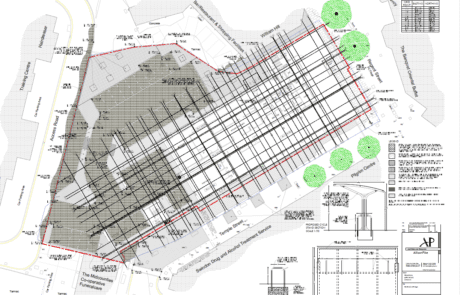
c.480 Vibro Stone Columns
Project Details
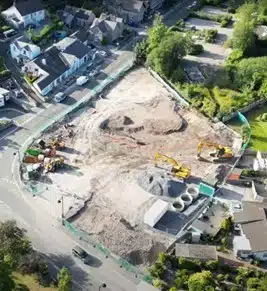
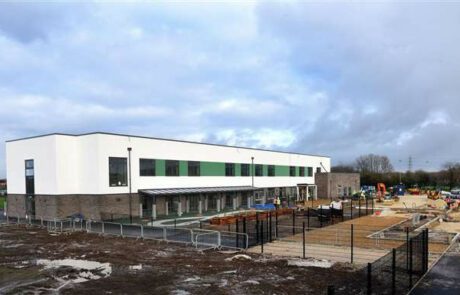
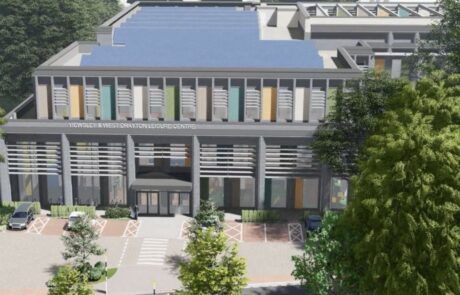
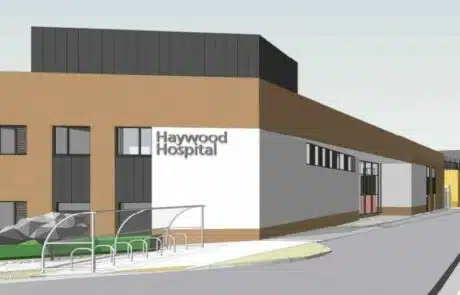
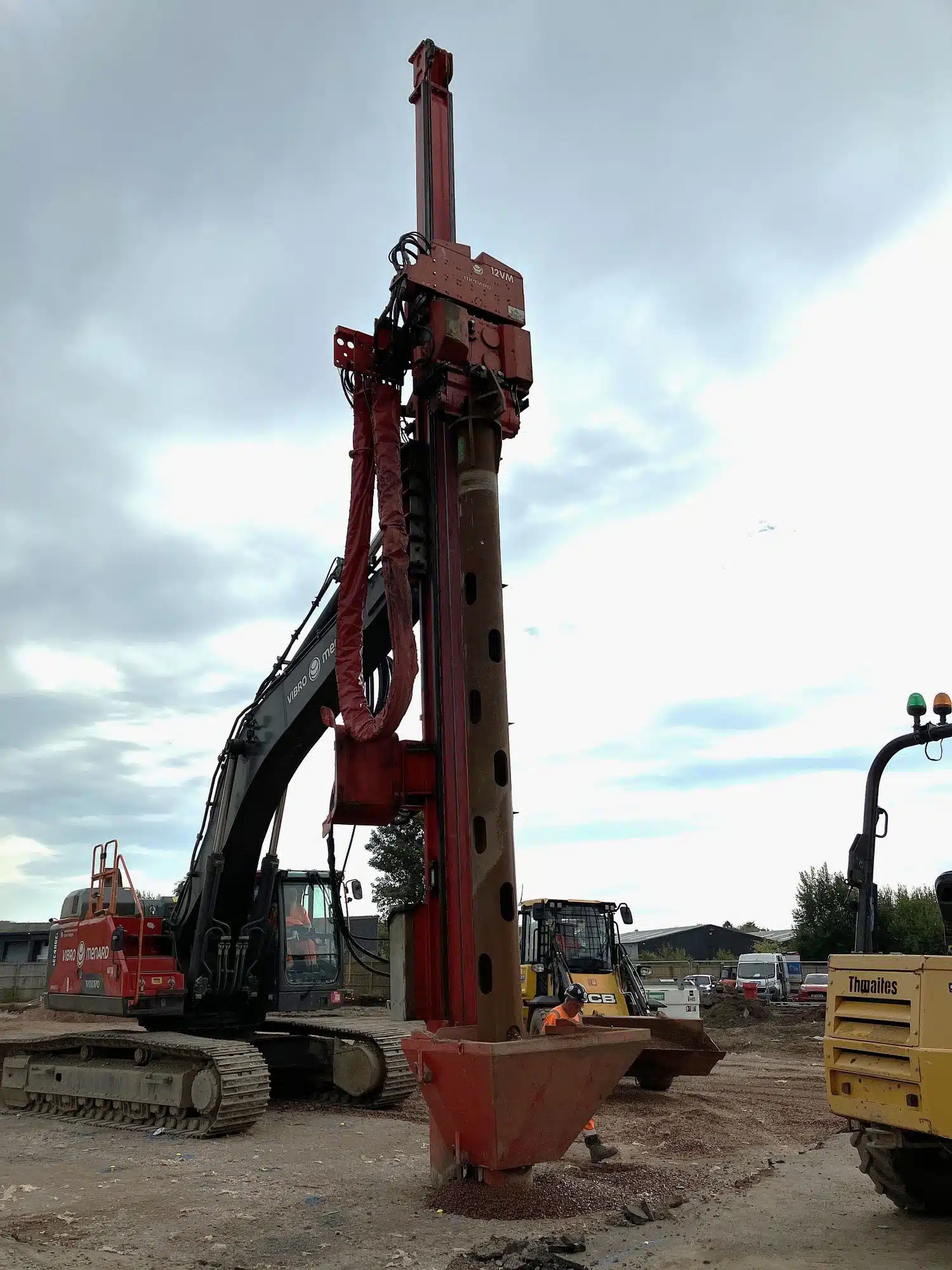
A new residential care home was proposed to be constructed at a site with a shallow groundwater table and running sands. The proposed 3-storey structure was to be supported on variable sizes of strip and pad foundations with an SLS bearing capacity of 150 kPa. During the ground investigation stage, it was initially assumed that the ground conditions would not be suitable for a vibro stone column (VSC) solution. However, when Menard was contacted by our repeat client Torsion Projects to provide advice on suitable ground improvement techniques, we were able to confirm that a bottom feed VSC technique could easily build robust stone columns through the weak, saturated soils.
Ground Conditions
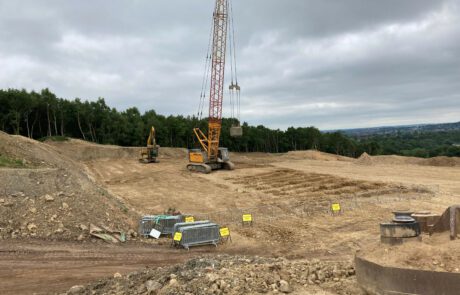
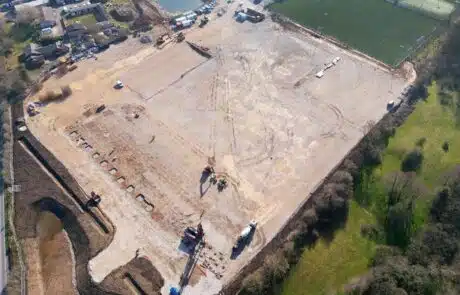
Historically, a two storey brick office/manufacturing facility occupied the site, but this had since been demolished leaving a predominantly hardsurfaced vacant site. The site investigation comprised cable percussive boreholes and trial pits, and these encountered a thin wedge of mixed clay and gravel made ground (associated with the previous development), underlain by initially loose becoming medium dense to dense gravelly sand (Glacio-Fluvial Deposits). Running sands together with shallow groundwater had been found in the trial pits. Sandstone was present at approximately 18 m below ground level.
Solution
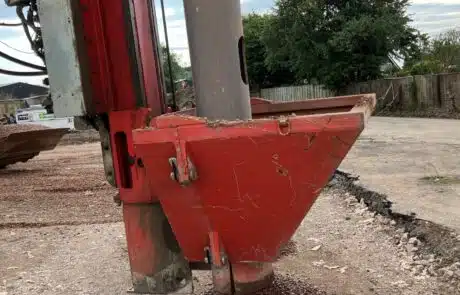
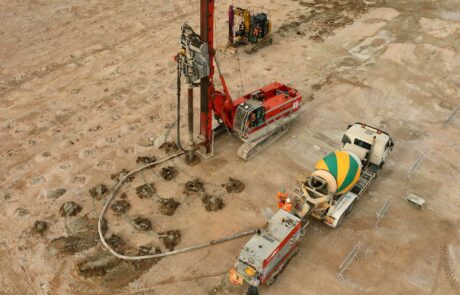
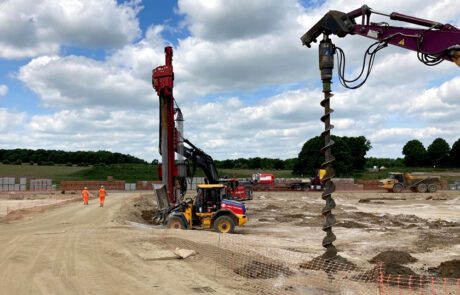
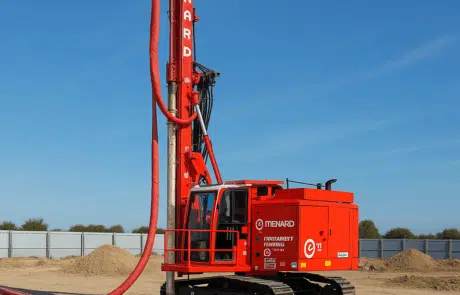
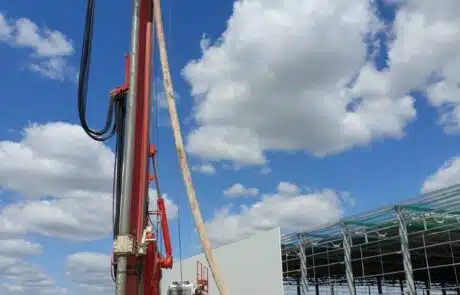
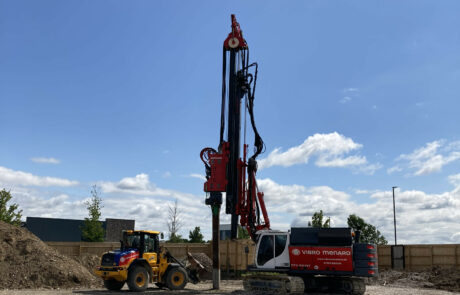
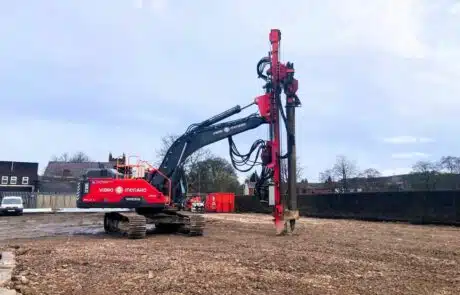
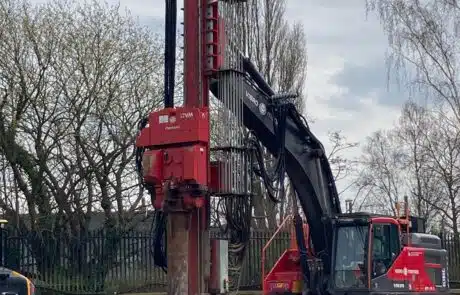
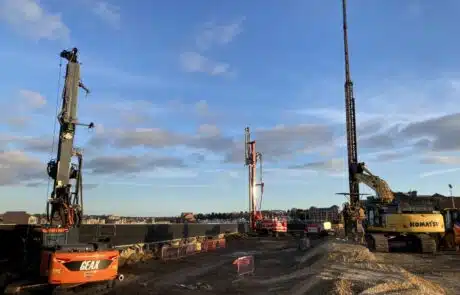
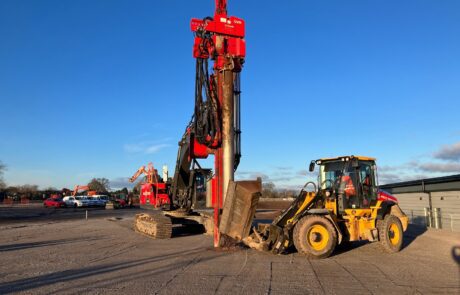
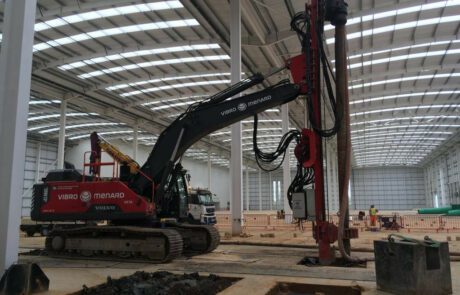
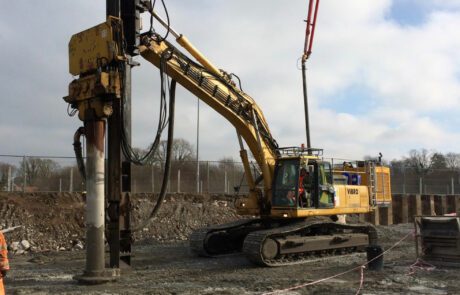
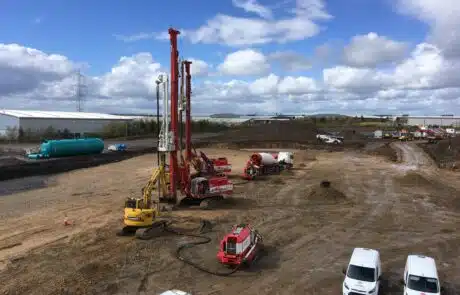
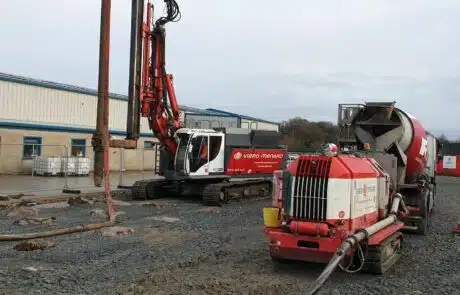
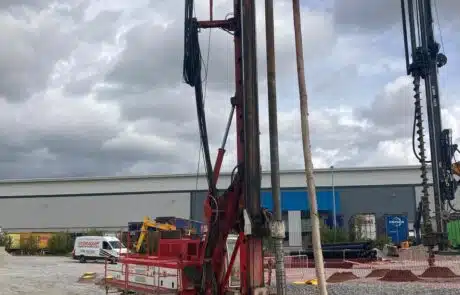
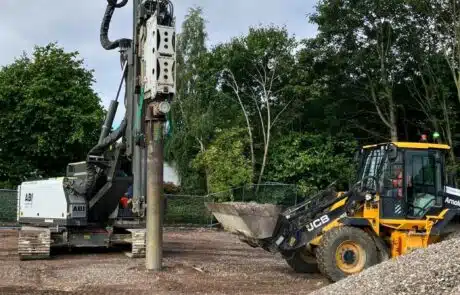
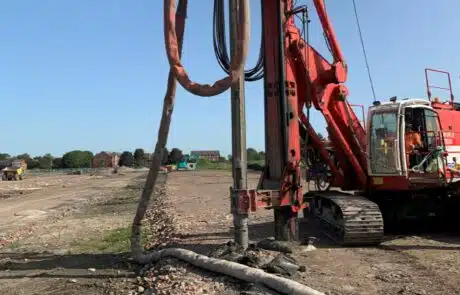
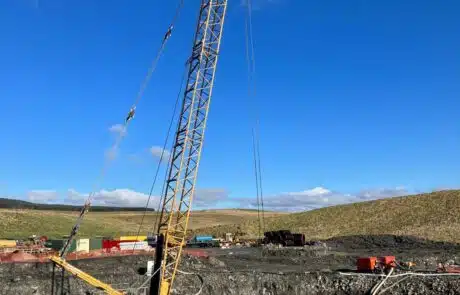
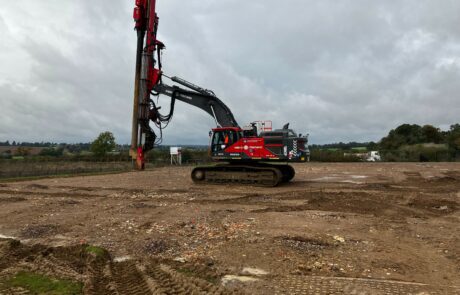
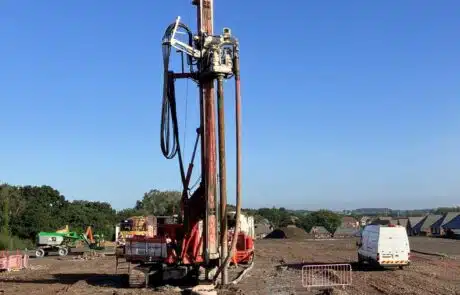
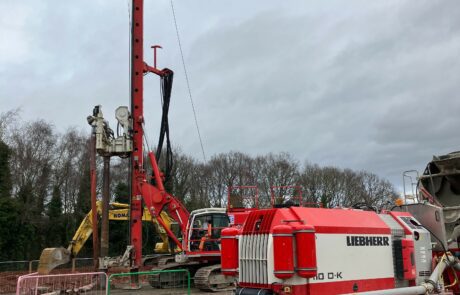
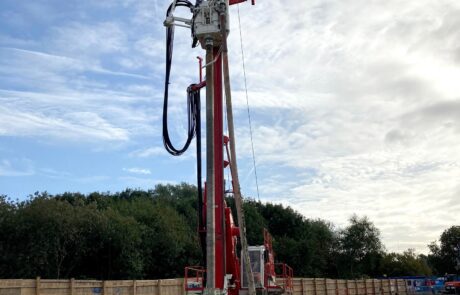
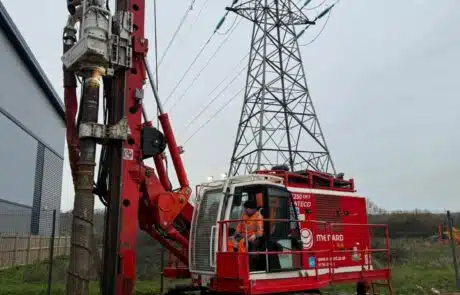
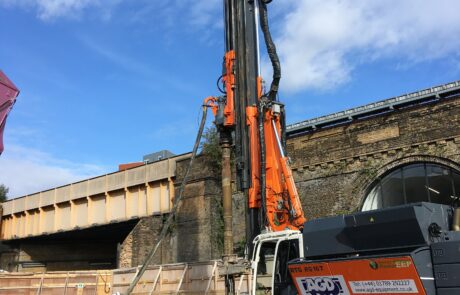
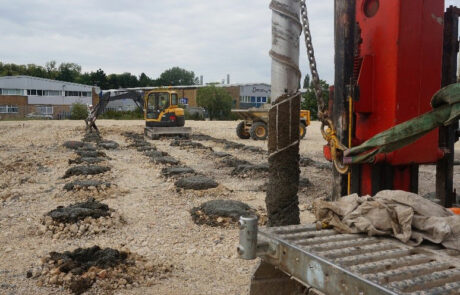
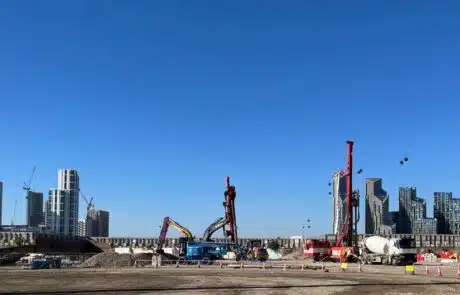
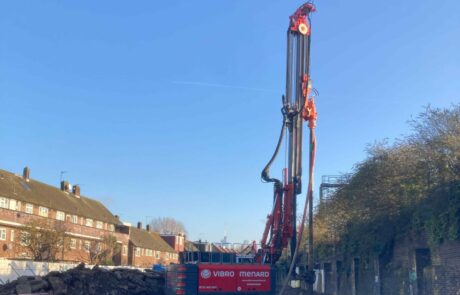
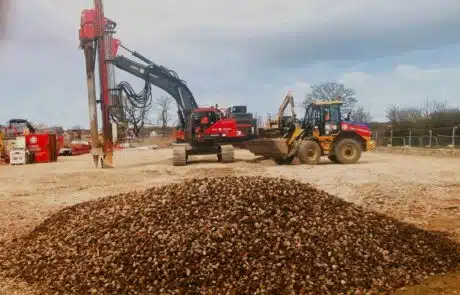
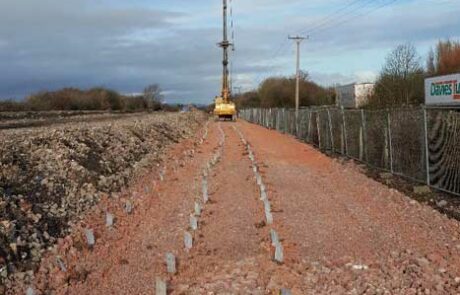
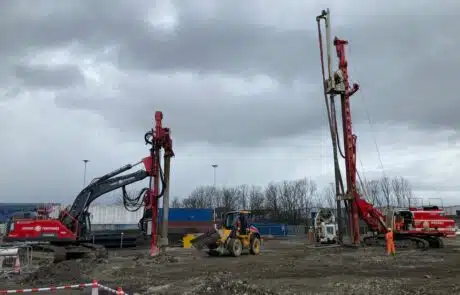
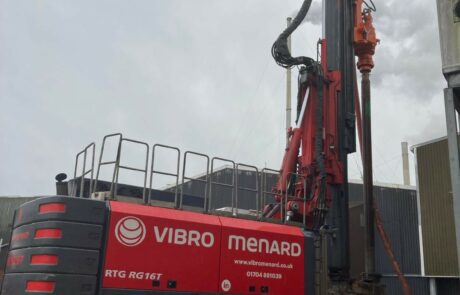
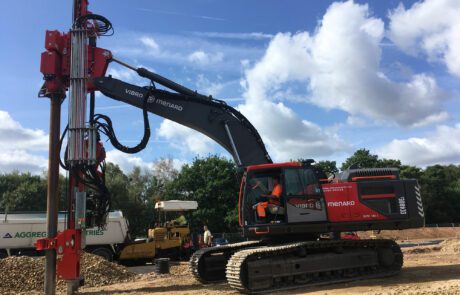
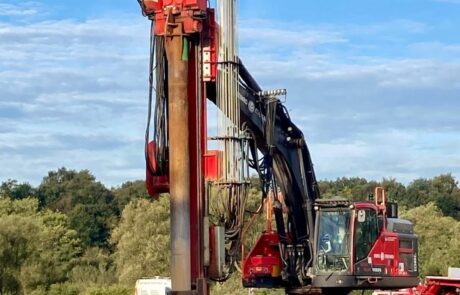
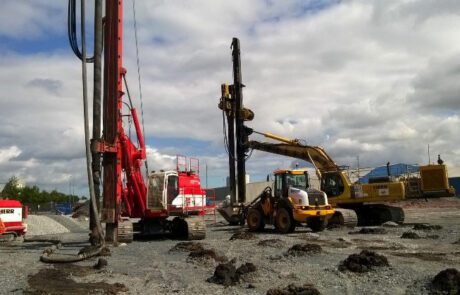
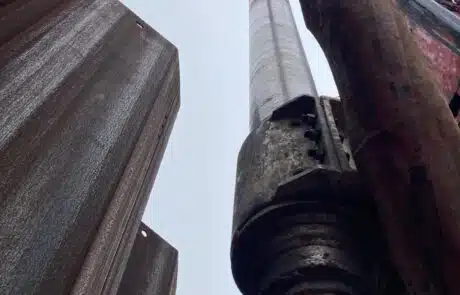
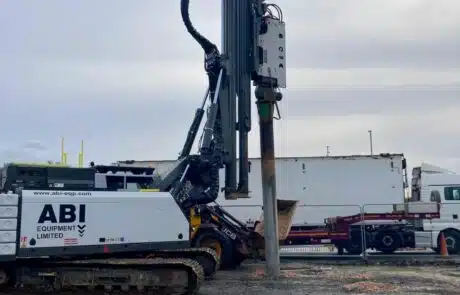
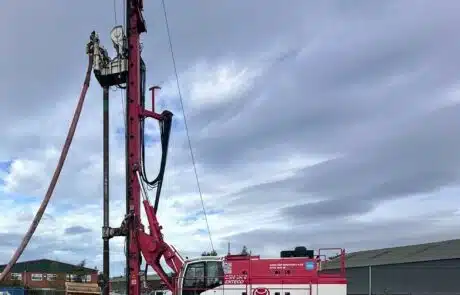
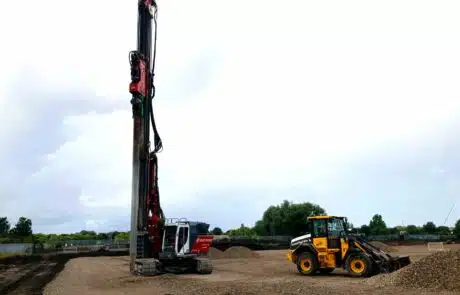
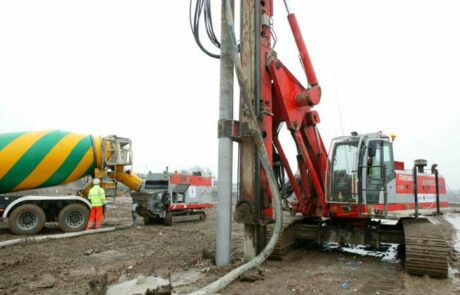
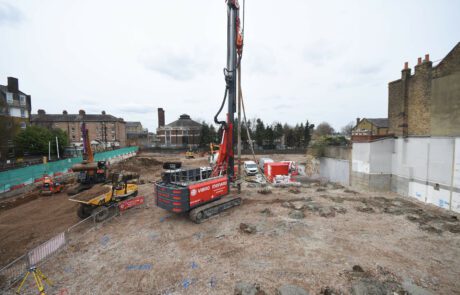
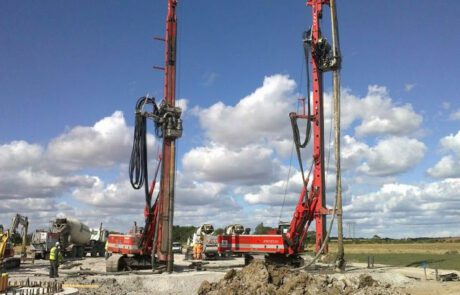
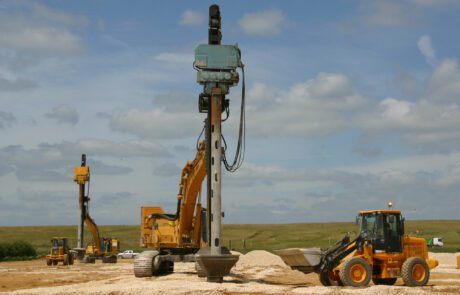
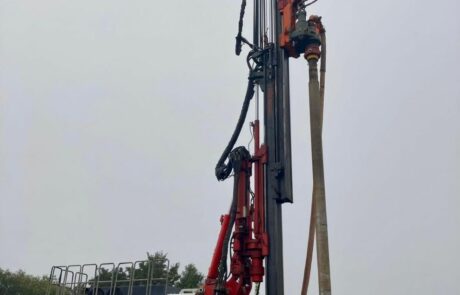
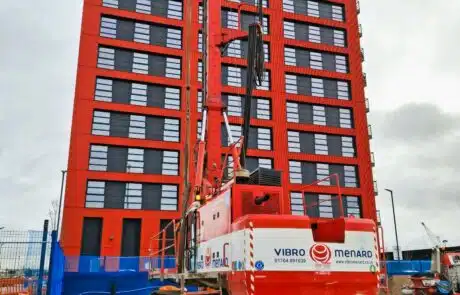
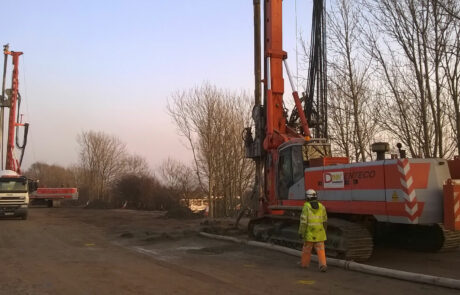
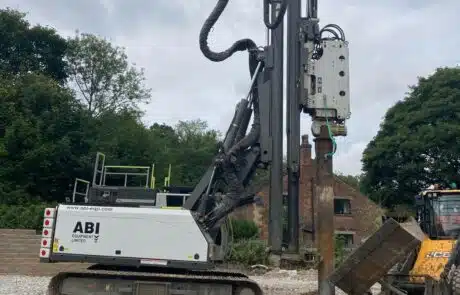
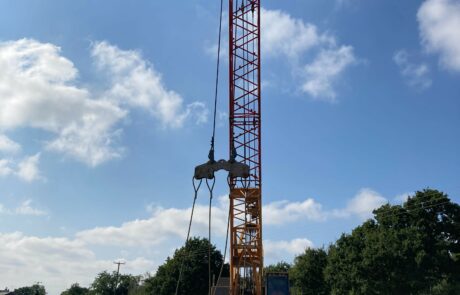
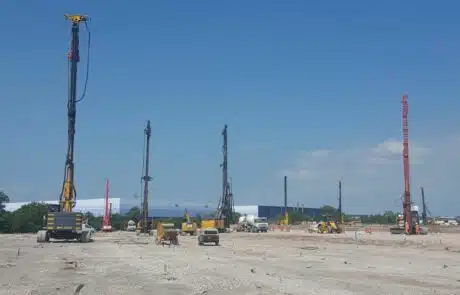
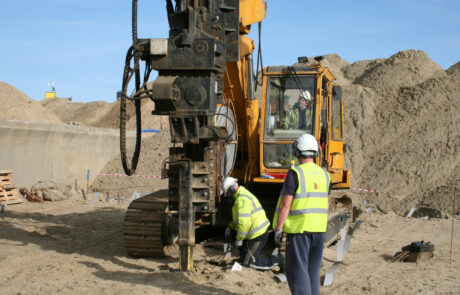
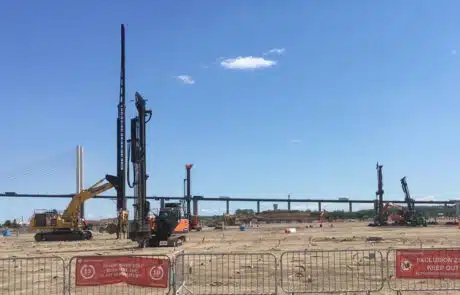
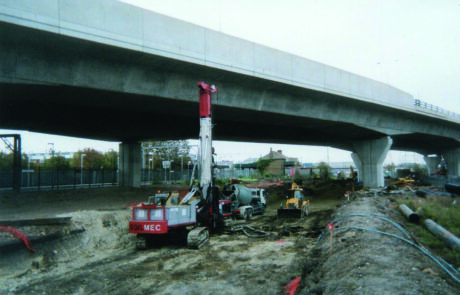
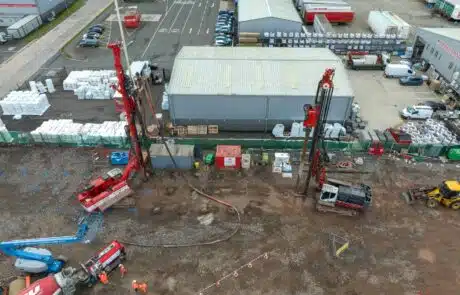
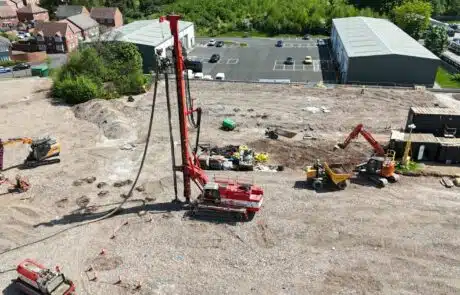
A bottom feed VSC solution was proposed, in view of the shallow groundwater and potentially running (collapsing) sand. VSC were installed to depths of c.3.5m to 5.0 m into the medium dense/dense sand deposits. With this technique, the vibroprobe penetrates to the required depth and remains in the ground whilst stone is fed from the hopper through slots in the vibroprobe to the bottom of the bore. The stone used for a bottom feed technique is smaller than typical i.e. 20-40 mm in size, to enable this to flow easily. The vibroprobe compacts this material under its weight and vibration, and a continuous column of dense granular material interlocking with the surrounding ground is built to the surface. The foundations can then be formed at shallow depth (typically 0.6m to 1.0 m below platform level) directly onto the VSCs. Post treatment settlement was calculated to be within standard limits of 25 mm total residual and 1:500 differential settlement. Upon completion of the VSC installations, plate load and dummy footing tests were undertaken as a quality check. The VSC site works were installed on schedule within a 2 week site period.