OWNER:
Queen’s University Belfast (QUB)
ENGINEER:
Doran Consulting
GENERAL CONTRACTOR:
Henry Brothers
MAIN FIGURES:
c.500 DR pillars

Project Details
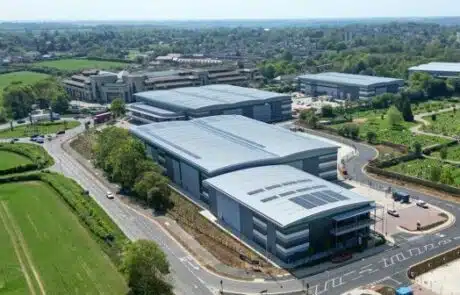
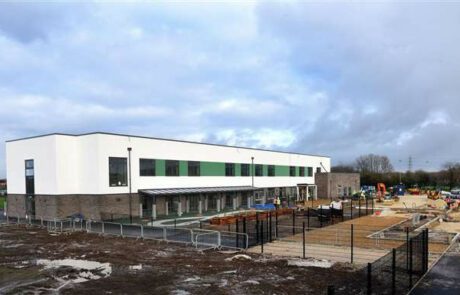
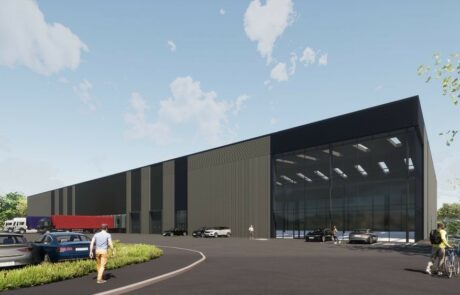
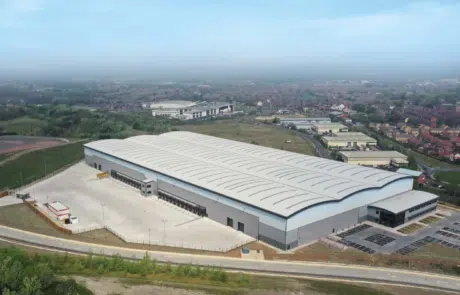
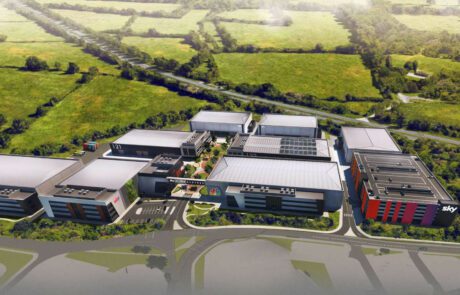
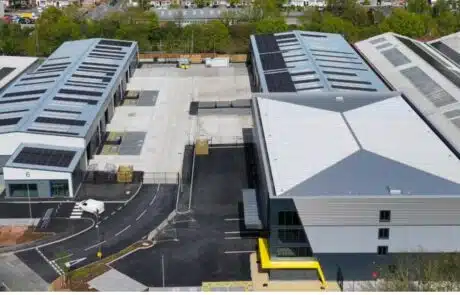
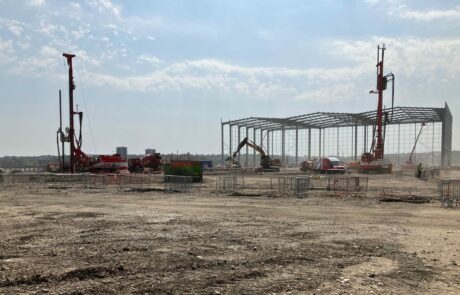
The Advanced Manufacturing and Innovation Centre (AMIC) is an industry-led, open-access, state-of-the-art manufacturing and engineering facility. It has been built through a £100m investment from the UK Government and Northern Ireland Executive through the Belfast Region City Deal, in conjunction with Antrim and Newtownabbey Borough Council and the two Universities in Northern Ireland (Queen’s University Belfast (QUB) and Ulster University (UU)). Focussing on low-carbon products, services and manufacturing processes, the 10,500m2 factory of the future opened in April 2026 and it is estimated it will contribute more than £1bn to the local economy by 2050.
Ground Conditions
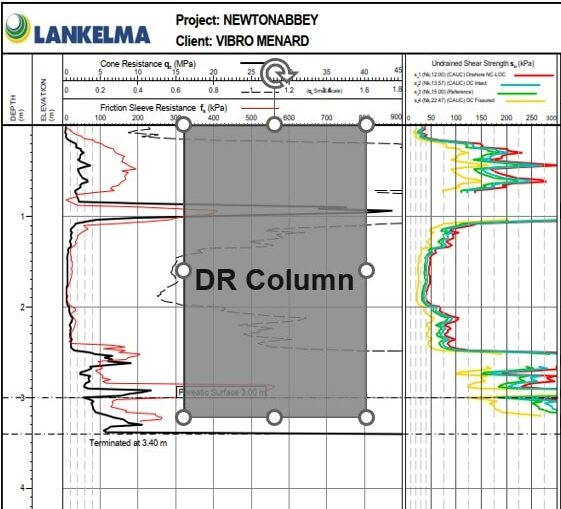
Ground conditions at the site comprise up to 1.5m of mixed Made Ground, overlying a layer of very soft to soft Silts and Clays to depths up to 4.5m. This is underlain by firm becoming stiff Clay (Glacial Till), with Basalt bedrock at depth. Groundwater is present at about 3m below ground level.
Solution
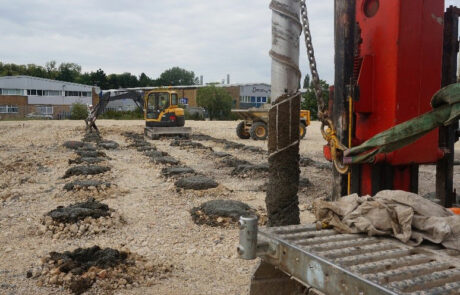
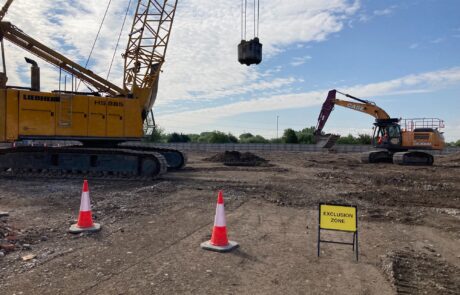
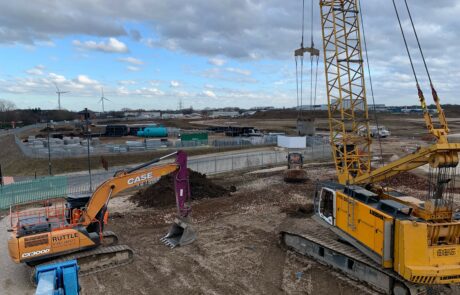
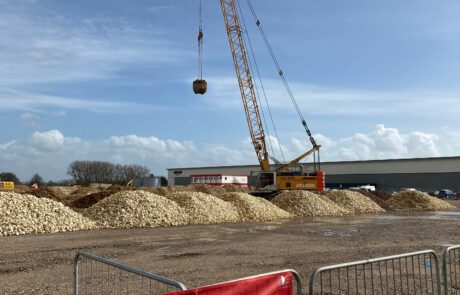
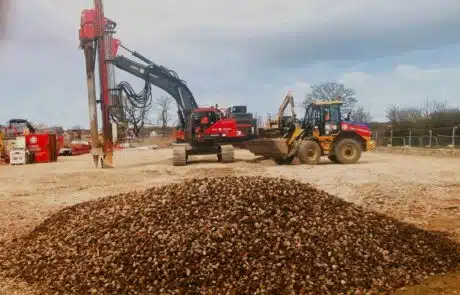
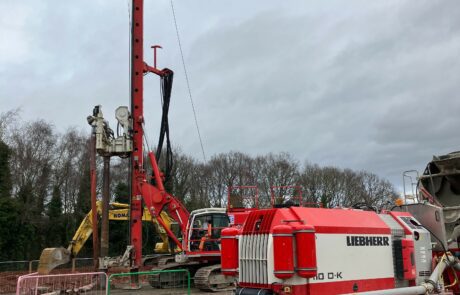
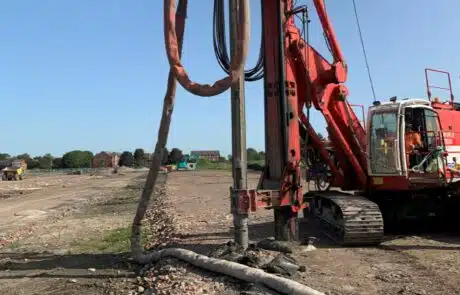
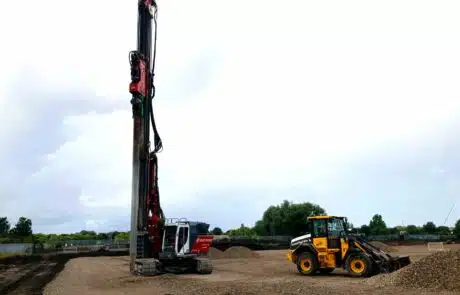
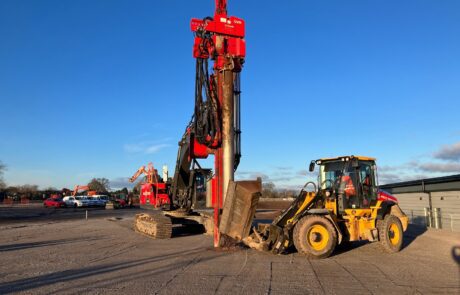
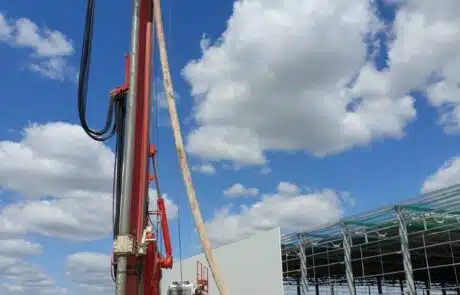
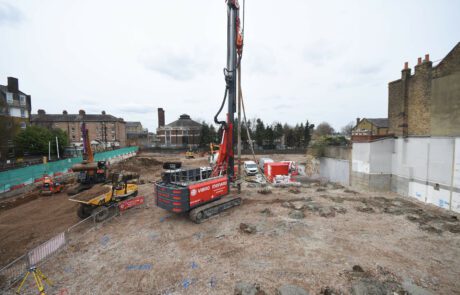
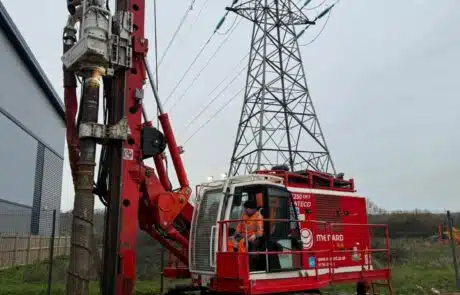
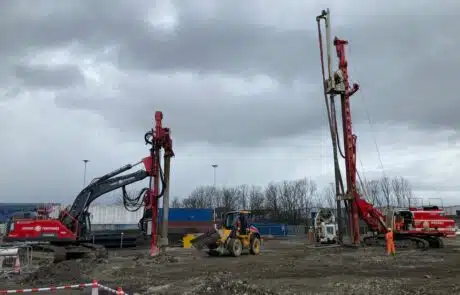
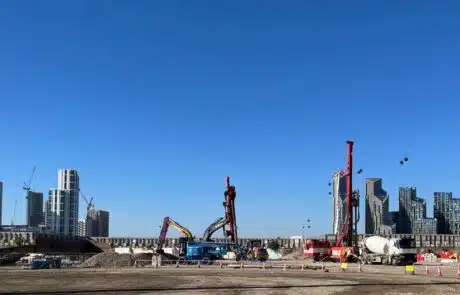
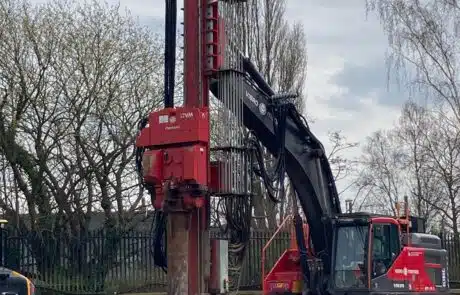
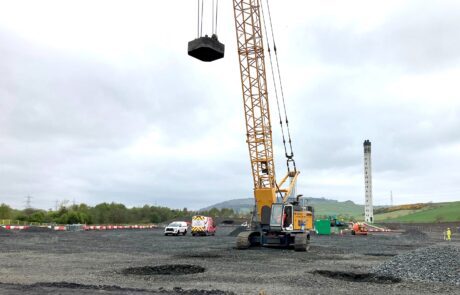
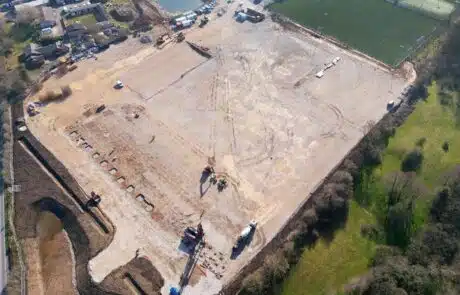
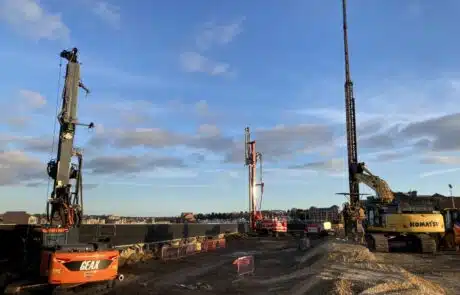
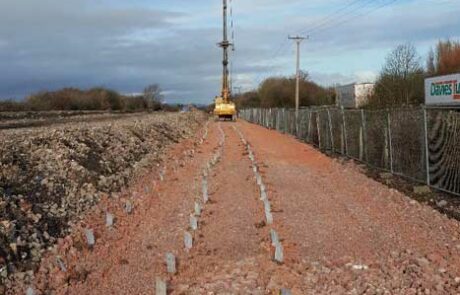
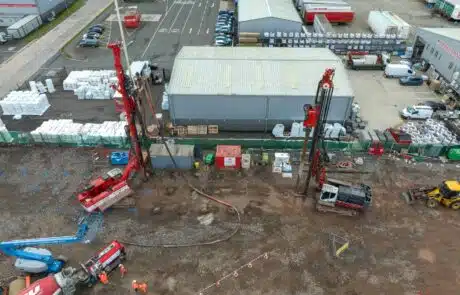
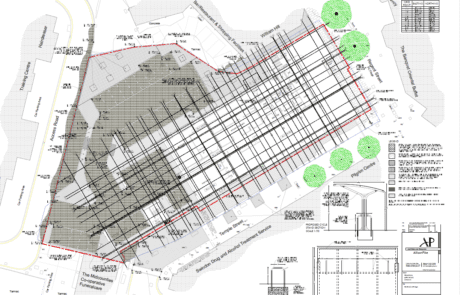
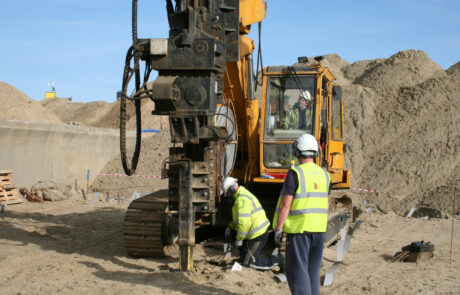
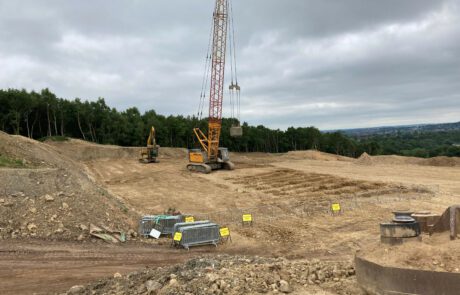
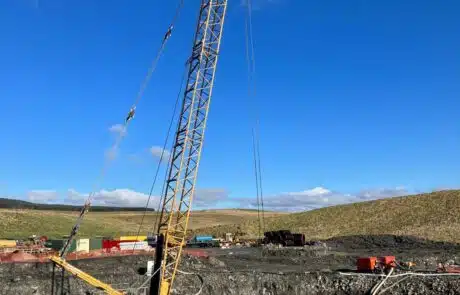
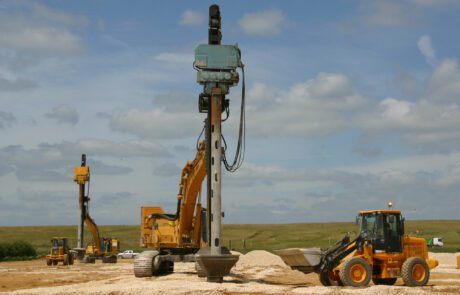
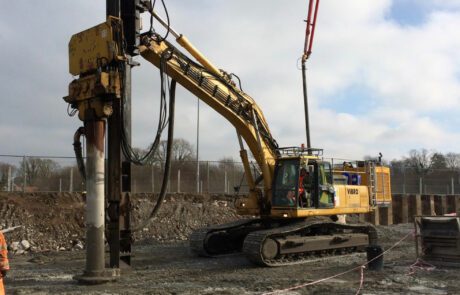
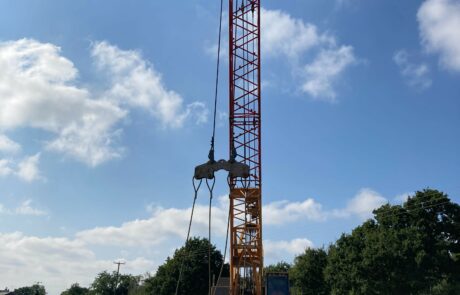
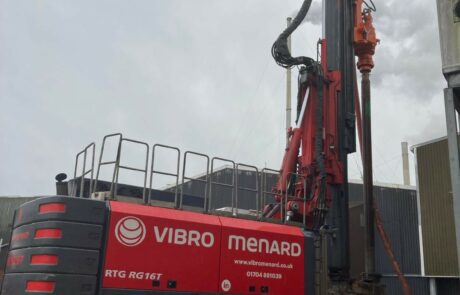
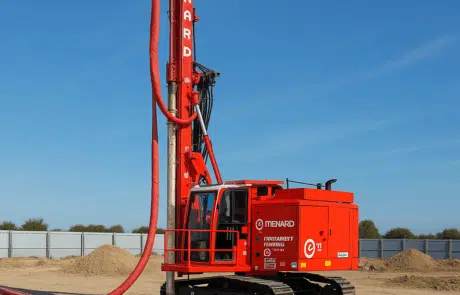
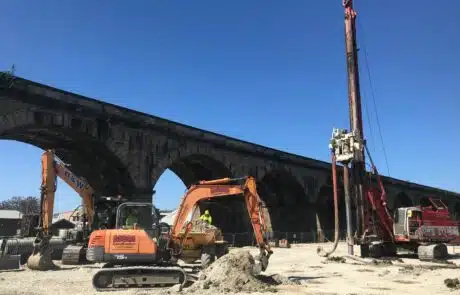
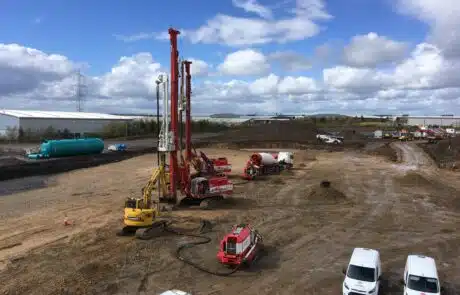
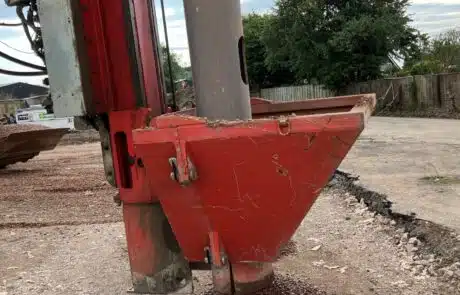
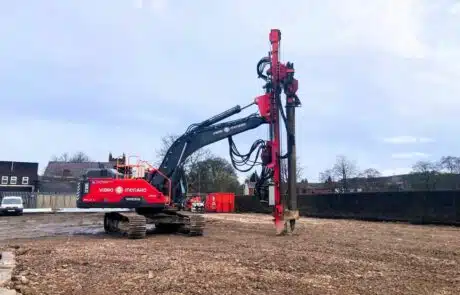
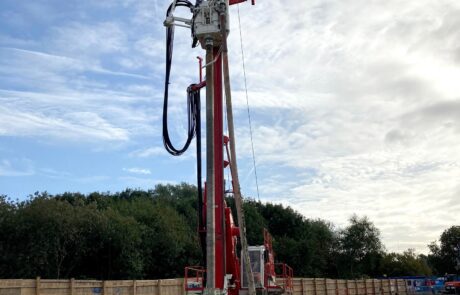
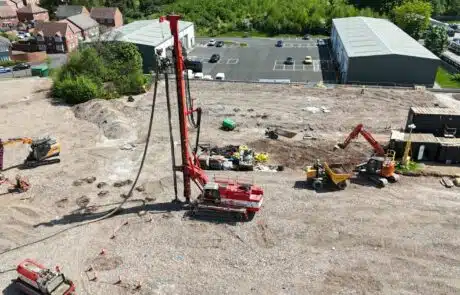
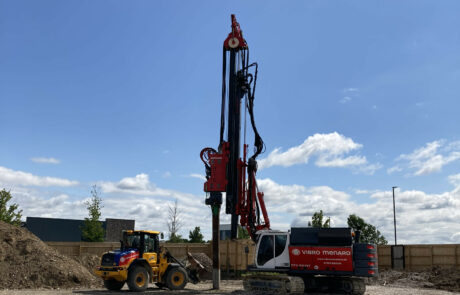
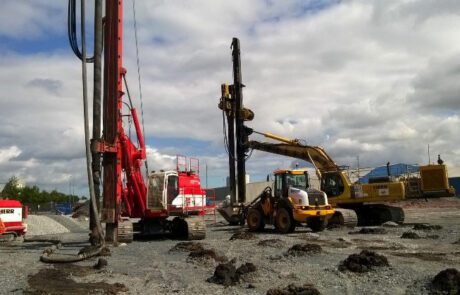
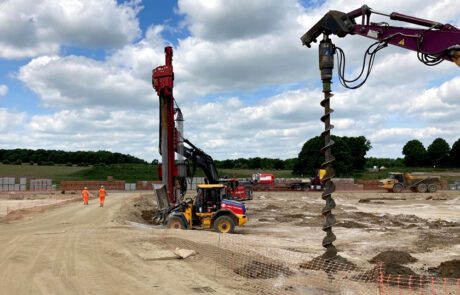
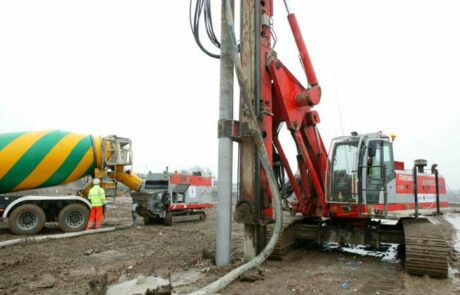
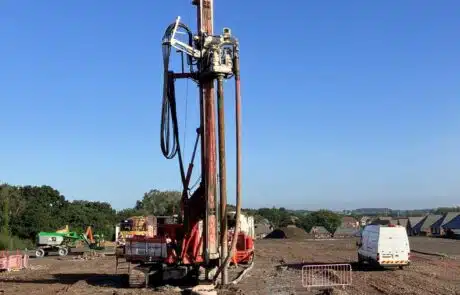
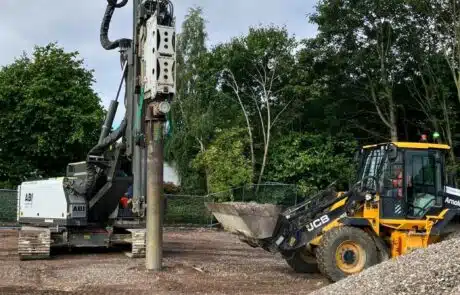
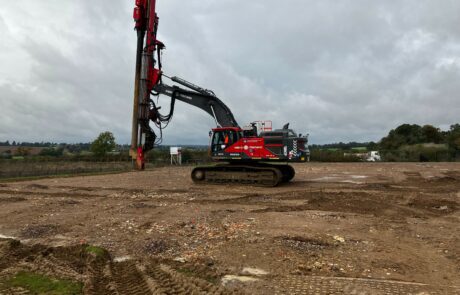
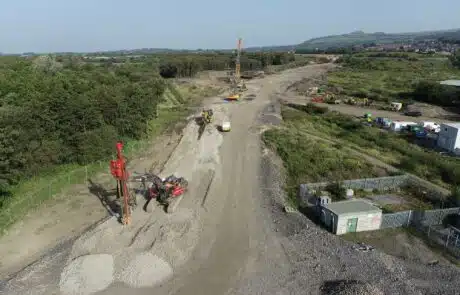
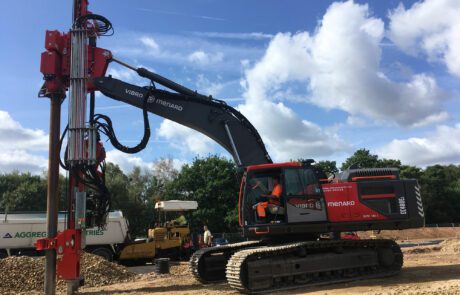
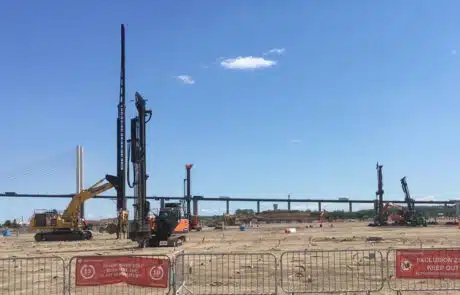
Due to the presence of heterogeneous Made Ground and very soft natural deposits a deep foundation solution was required. The consulting engineer contacted Menard to consider whether a ground improvement solution was possible, as an alternative to the piling initially considered. Due to the relatively shallow nature of the weak soils it was apparent that the Dynamic Replacement (DR) system would provide the most cost-effective ground improvement solution. The DR system consists of transmitting high energy waves through the upper compressible soils by the repeated lifting and dropping of a large pounder (16Tonne, 1.6m diameter weight), using a heavy crawler-crane. The hole formed by the pounder is infilled with suitable granular fill and this is then driven down to form a large diameter column/pillar of stone, which acts to reinforce and stiffen the overall ground conditions. The weak soil is displaced laterally, with the technique delivering replacement ratios of up to 25%. Pillars up to 4.5m were formed at the site. The Dynamic Replacement (DR) pillars are placed at close centres under the foundations (to achieve allowable bearing pressures of up to 200kN/m2 on this scheme) and at wider centres under the floor slabs, to allow ground bearing floor slabs to be adopted, with loads ranging up to 110kN/m2. These floor loads are particularly high, due to the specialist type of manufacturing that could be carried out at the facility. Design confirmed that this form of ground treatment would allow post-construction settlements to be maintained to within normally acceptable limits.
Sustainable development
Dynamic Replacement (DR) is one of the most sustainable forms of ground improvement available. Only stone aggregate is used in the construction of the DR pillars. No concrete or steel are used, and so the levels of embodied carbon are very low, thus ensuring that the environmental benefits are considerable. Using the DR system allows standard, shallow strip and pad foundations and ground bearing slabs to be utilised (rather than heavily reinforced and thick suspended concrete floors), so the follow-on structural work is also optimised, in terms of materials and programme. Close monitoring of noise and vibration levels, confirmed that these were kept within acceptable limits.