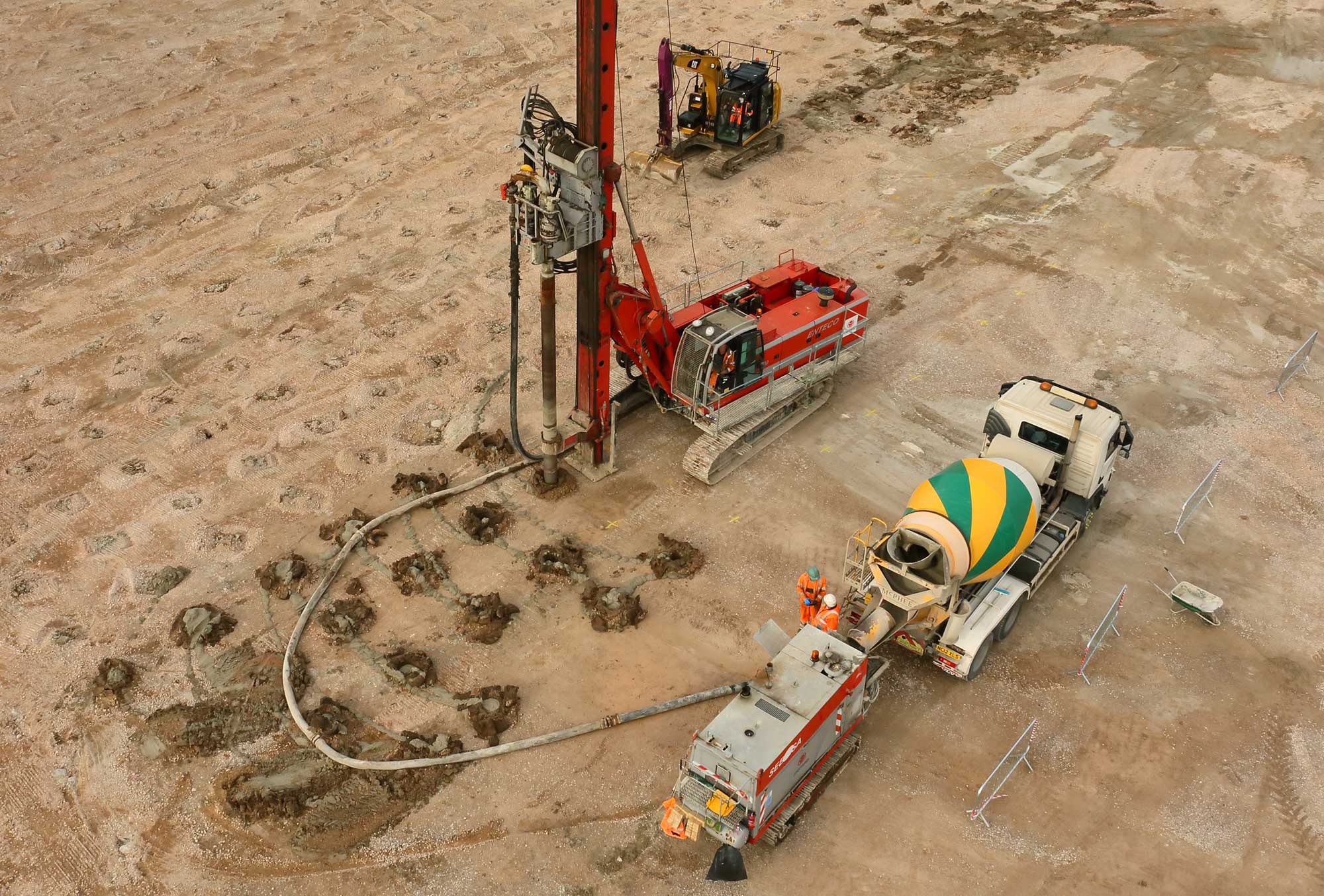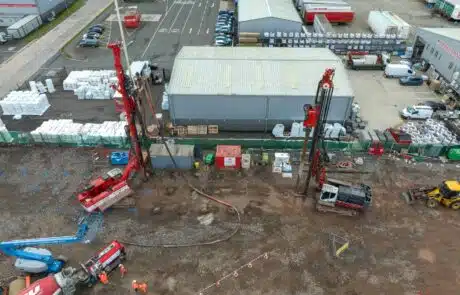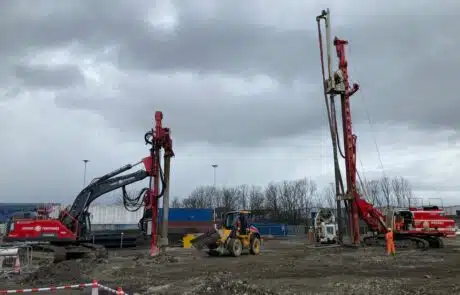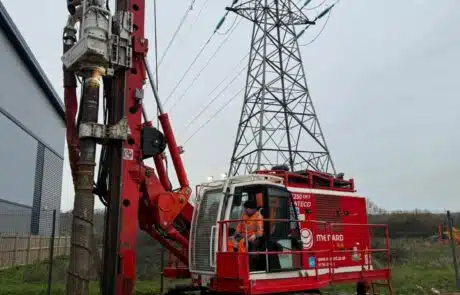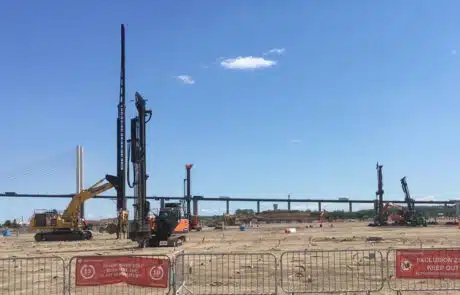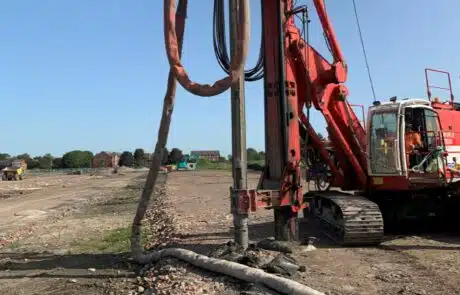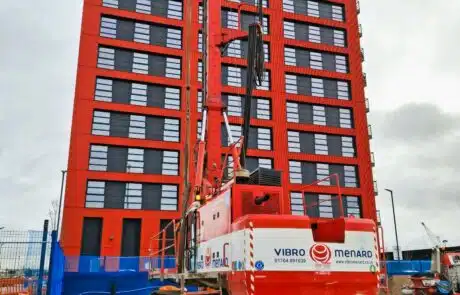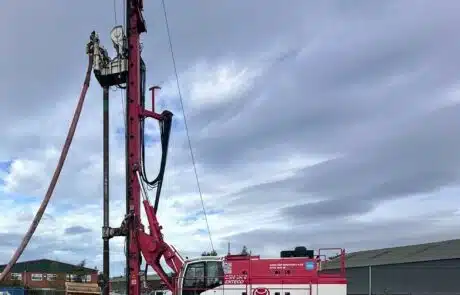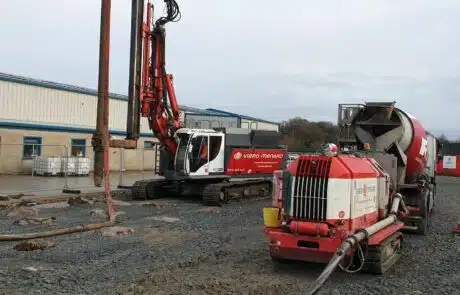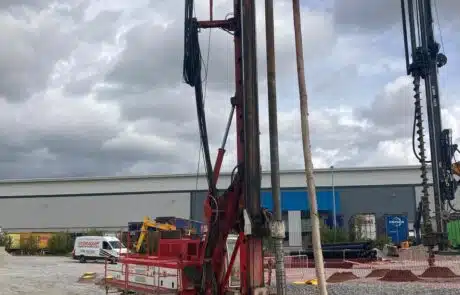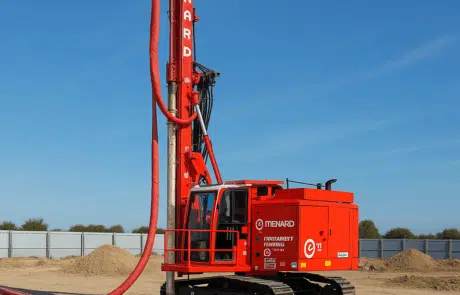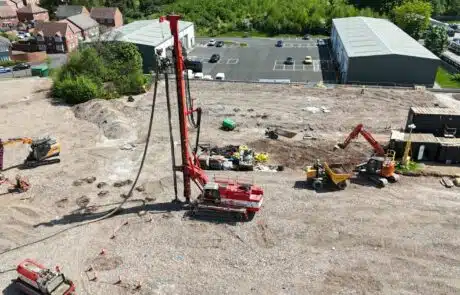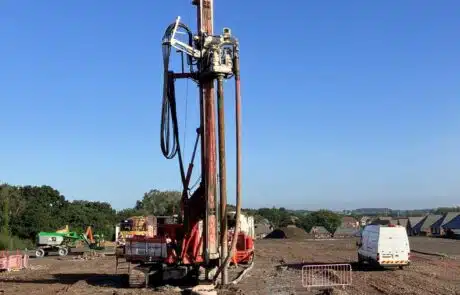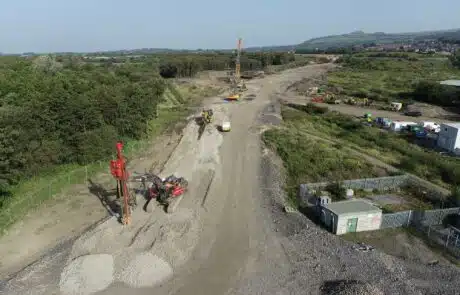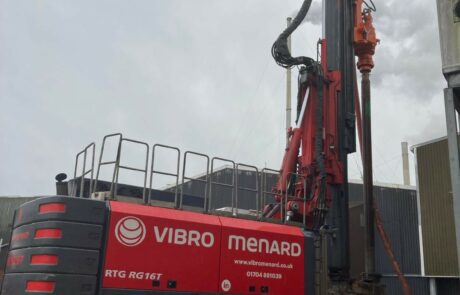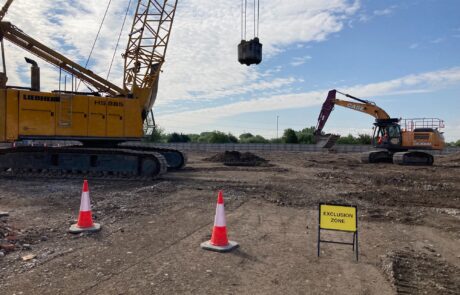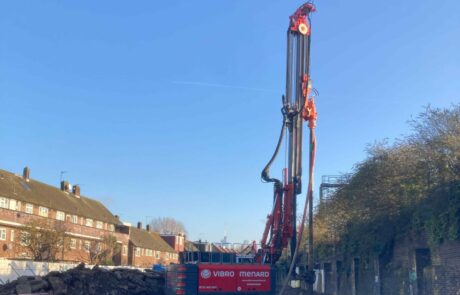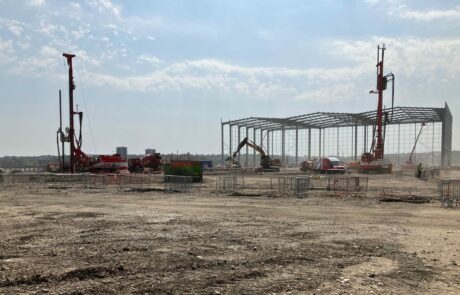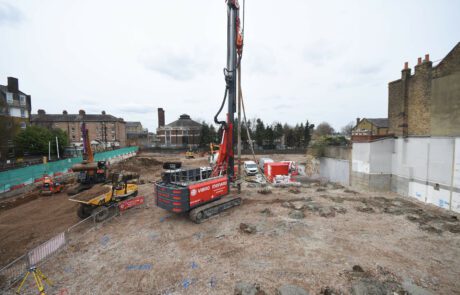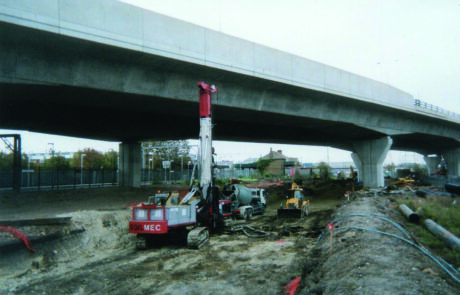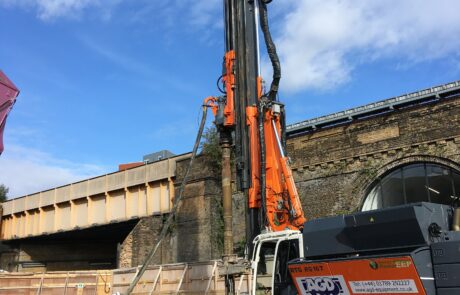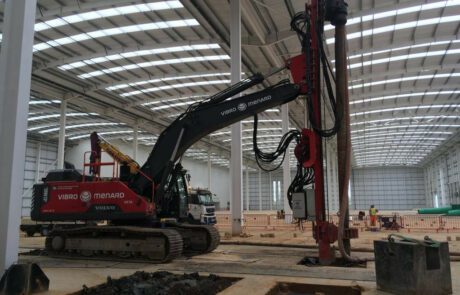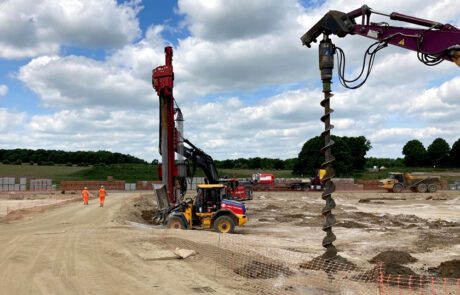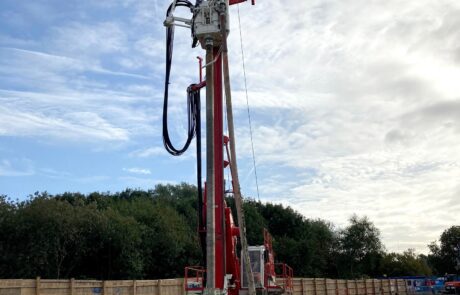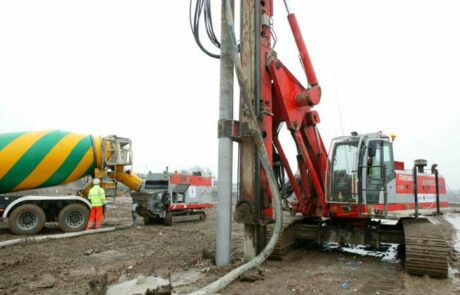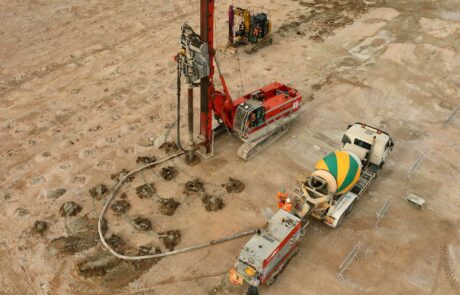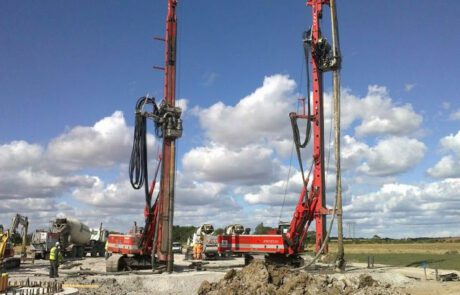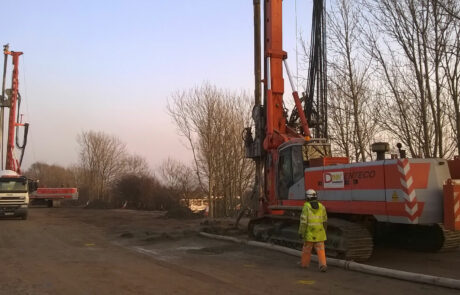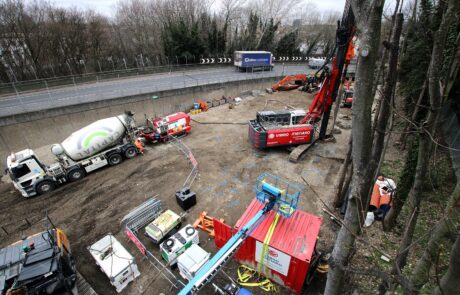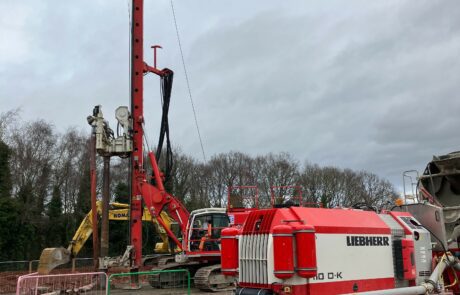
Where traditional ground improvement techniques may not be suitable due to either poor soil strength, high loadings or tight settlement criteria, controlled modulus columns (CMCs) provide a fast and economical ground improvement alternative to piling. CMCs are also known as rigid inclusions.
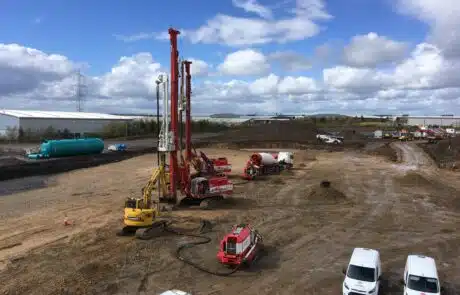
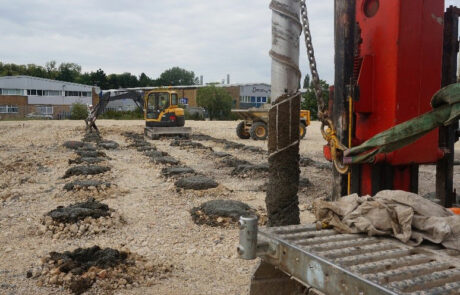
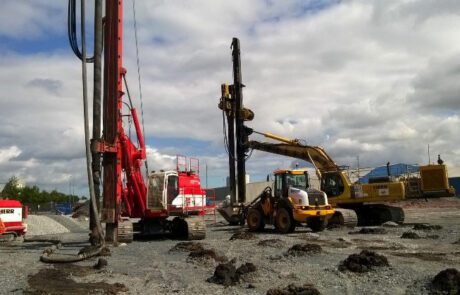
The technique installs low strength concrete columns, 280mm to 500mm in diameter, up to 50m in depth using our displacement tools.
Benefits
- Suitable across a range of soil types including soft to very soft organic clays
- Enhanced bearing capacity
- A reduction in the total and differential settlements
- Ground bearing foundation solution utilising a distribution mattress
- The rig working platform can be used as part of the distribution mattress
- No breaking down of CMCs. Trimming is undertaken while the CMCs are still wet
- The vibration free displacement process creates minimal spoil
Applications
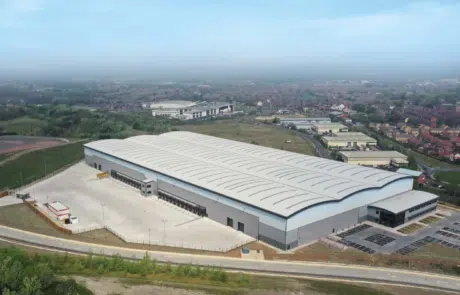
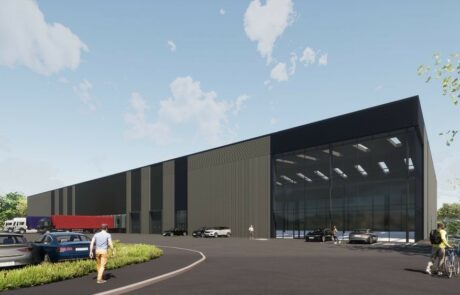
- Commercial/industrial foundations and floor slabs with high tolerances and/or heavily loaded
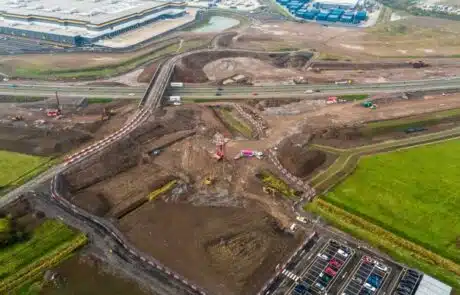
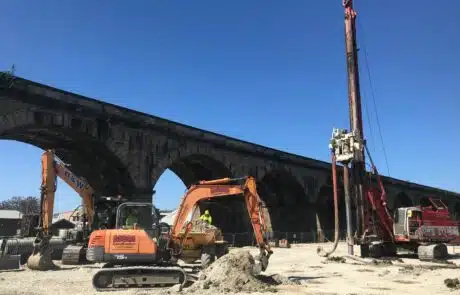
- Road and rail embankments
- Silos, tanks and wind turbines
- Residential buildings traditionally founded on driven piles
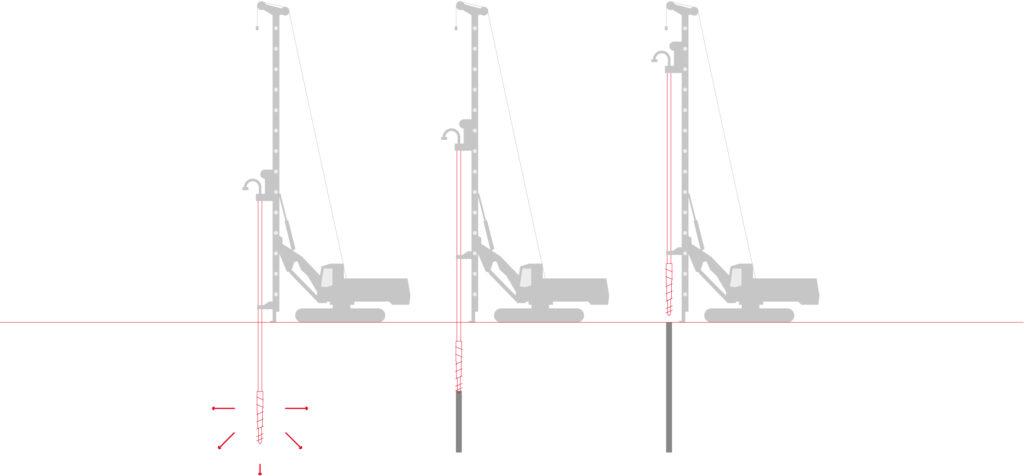
Presentation and key elements
What are CMC rigid inclusions and why do we use them?
Controlled Modulus Columns (CMC), otherwise known as rigid inclusions, are a ground improvement technique that controls and reduces settlement and increases bearing capacity in soft or loose soils. As an alternative to traditional deep foundation solutions, Controlled Modulus Columns can economically improve the global design of overlying structures.
Fundamentals of CMC rigid inclusions
The reinforcement of the soft or loose soil layers increases the bearing capacity and reduces settlement through using rigid inclusions. The scheme details a load sharing system combining the existing soil capacity and the stiffer rigid inclusions to ensure compliance with project specifications.
How are CMC rigid inclusions installed?
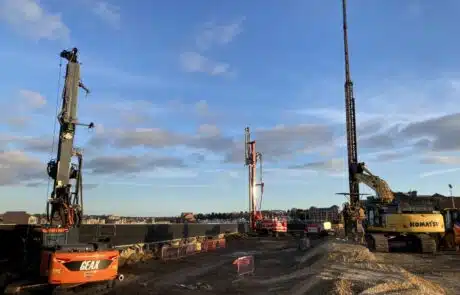
The installation of CMCs is carried out via a simple and efficient process with or without soil displacement by low-pressure injection (generally up to 2 bars) of a grout or concrete through the hollow core of the drilling tool. These columns generally have a diameter of between 280 and 500 mm, and a depth of up to 50 m. The entire process is vibration free and does not create spoil, which allows for cleaner project sites.