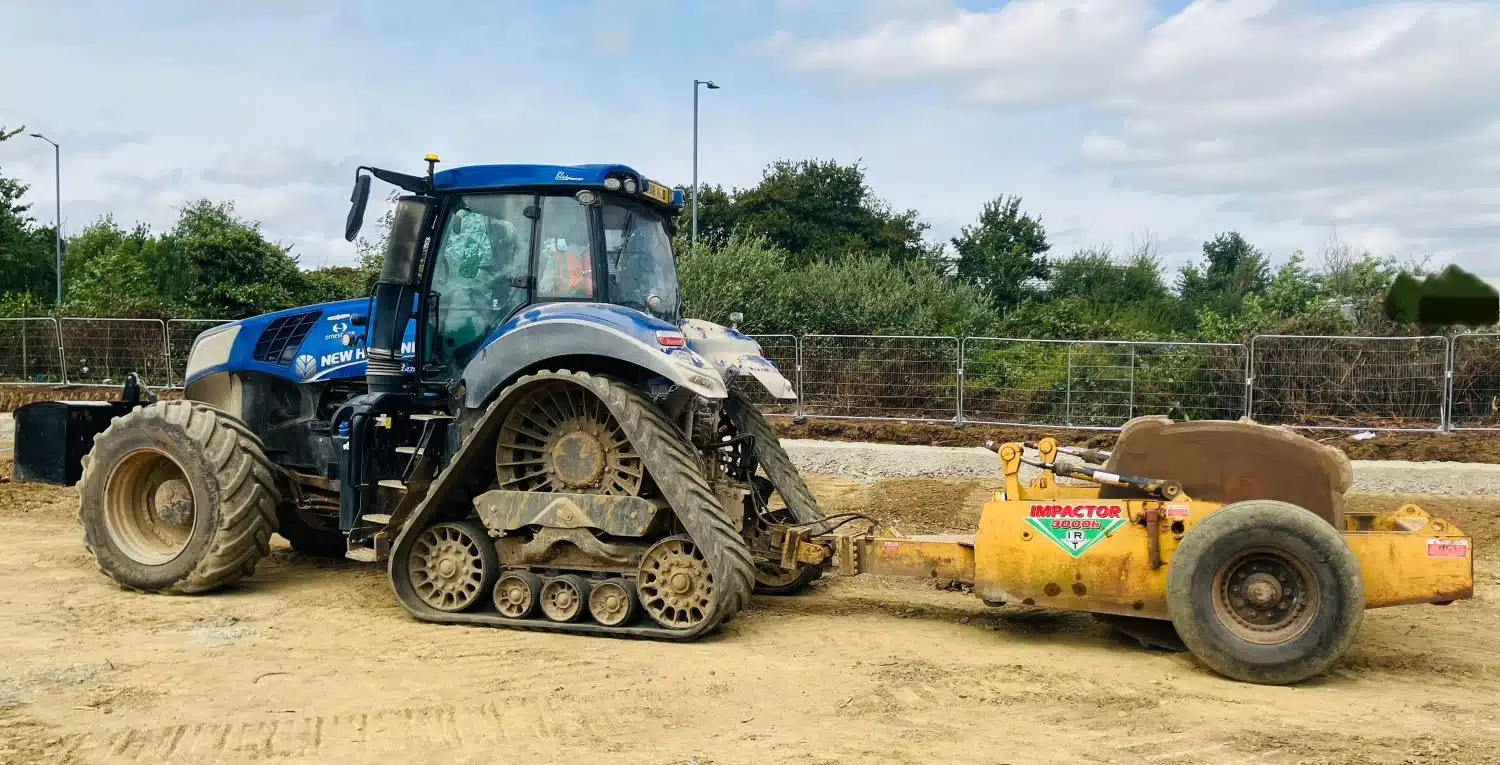
Rolling Dynamic Compaction (also known as High Energy Impact Compaction) is a ground improvement method designed to densify near-surface soils efficiently across large areas.
The technique applies repeated, high-intensity impacts at ground level using specially shaped rollers, enabling deeper and more uniform compaction than conventional rolling methods.

Benefits
- Enhanced bearing capacity
- Reduction in total and differential settlement
- Efficient treatment of large surface areas
- Underground obstructions do not hinder the process
- Greater depth of influence compared with conventional roller compaction
Application
- Commercial/industrial platforms and warehouse floor slabs
- Car parks, roads and hardstandings
- Large-scale reclamation areas with variable characteristics
Presentation and key elements
What is Rolling Dynamic Compaction and why is it used?
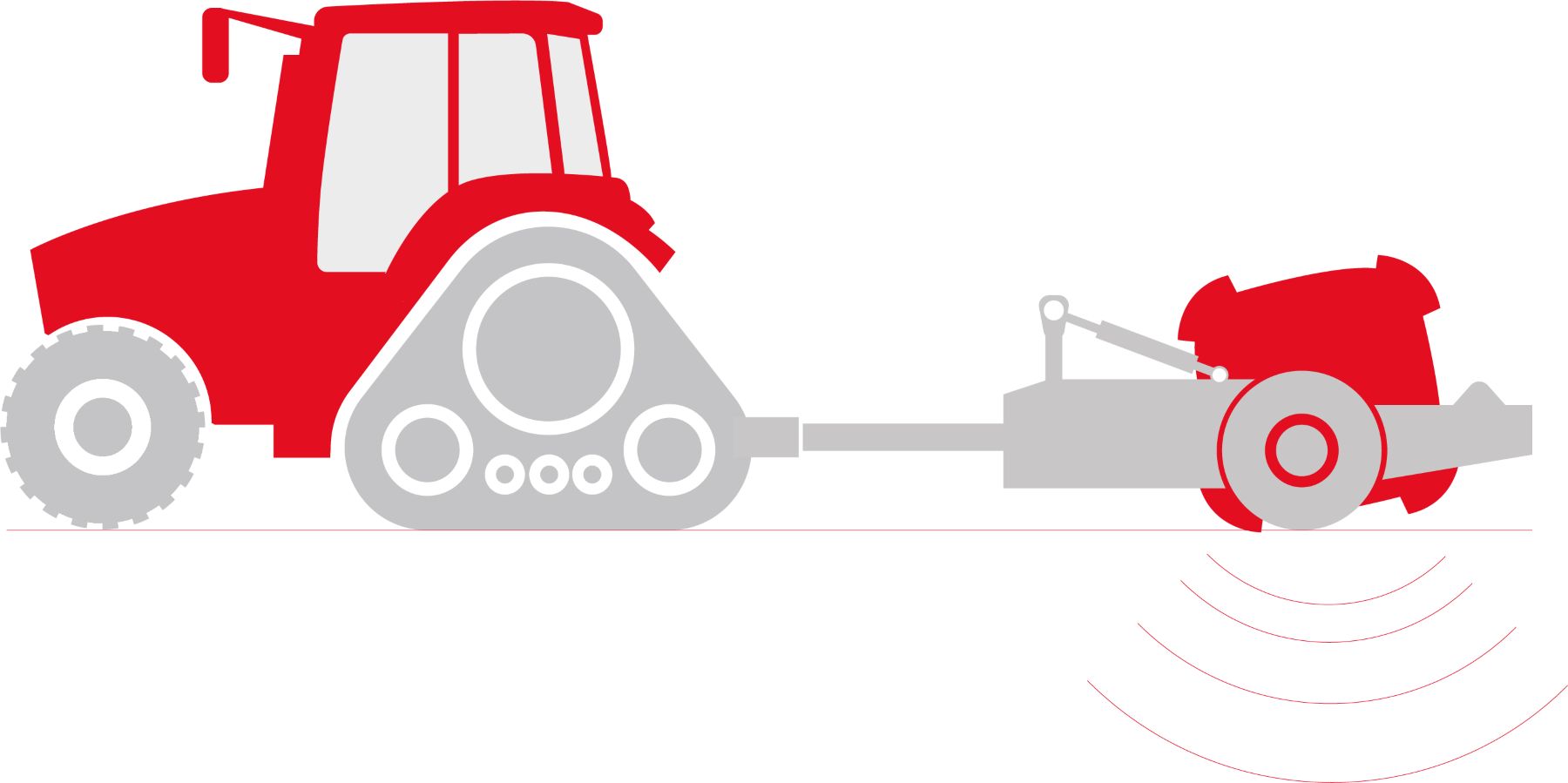
The Rolling Dynamic Compaction (RDC) technique enhances ground densification by utilising the dynamic impact of repeated drops from a non-circular roller. This process increases soil density, leading to enhanced stiffness and strength, thereby improving bearing capacity while reducing both total and differential settlement. The depth of influence achieved by RDC is relatively shallow, and depends upon factors such as the size and weight of the RDC unit, the number of drops / passes, and the specific characteristics of the soil being treated.
Fundamentals of Rolling Dynamic Compaction
The Rolling Dynamic Compaction (RDC) process involves towing a heavy impact roller across the treatment area in a planned sequence of overlapping passes. High-energy waves are transmitted through compressible soil layers to improve their geotechnical properties at depth. RDC is particularly effective for granular soils and is well-suited to non-organic heterogeneous fill, made ground, and reclamation areas with variable characteristics. It can also be applied to both saturated and unsaturated cohesive soils.
As the RDC unit traverses the treatment area with multiple drop passes, it not only improves the ground but also helps identify soft spots, creating a more uniform and stable sub-grade.
Execution of Rolling Dynamic Compaction
Rolling Dynamic Compaction (RDC) is carried out on a smooth, graded, solid formation trafficable by heavy equipment, to enable multiple passes of the treatment area. The RDC unit usually compacts the ground in a continuous oval track movement across the working area, ensuring a constant optimal travel speed. The number of passes required to complete treatment of the working area will depend on the characteristics of the soil and improvement required to support the structure within the settlement tolerances. Usually, the compaction of the soil will be taken to effective refusal, where further drop passes do not significantly increase the density of the ground.