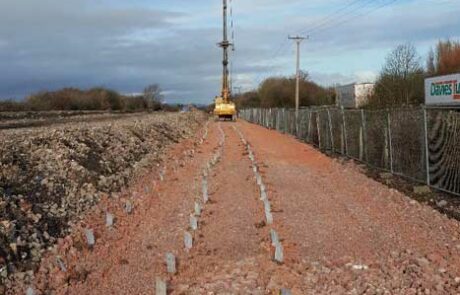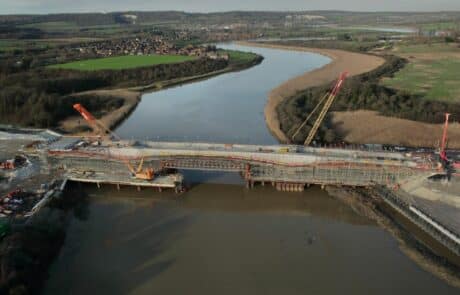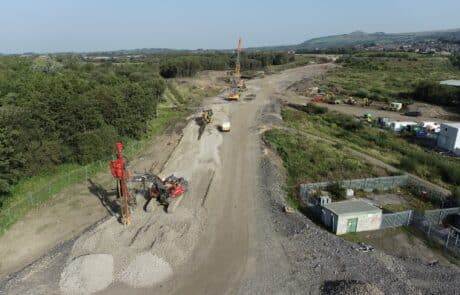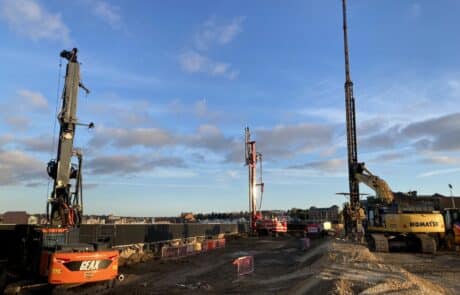
An economical way to accelerate consolidation in saturated soils is to create vertical pathways by the introduction of vertical drains, on a tight grid.
As the load is applied, the resulting increased pore pressure is permitted to dissipate via the vertical drains to the surface. Where surcharging by applying load is not economically viable, vacuum consolidation can be adopted, whereby a reduction in atmospheric pressure (vacuum) at the head of the vertical drain, creates an upward flow of water from the soils.

Benefits
- Enhanced bearing capacity
- Accelerated settlements, allowing embankments to be constructed more quickly, without staged construction
- Particularly suitable for thick deposits of soft cohesive soils
- Fast installation making it economical for large areas
- Can be used in conjunction with other systems e.g. vertical drains to induce settlement and prevent pore water developing during installation
Application
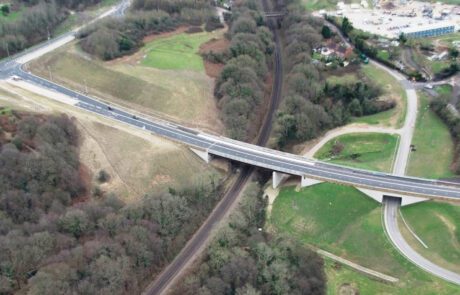
- Infrastructure schemes including road and railway embankments, water treatment plants and windfarms
- Any site being upfilled, where thick deposits of weak, cohesive soils are present
Presentation and key elements
Vertical Drains and Vacuum Consolidation, explained
When a load is applied to a structure on compressible soils for an extended period of time, it causes settlement. Prefabricated Vertical Drains (PVDs), otherwise known as Wick Drains or Band Drains, are a ground consolidation technique used to control the long term (over 10 years approximately) residual settlement in saturated, cohesive soils such as clays and silts, within acceptable limits.
Menard VacuumTM has been created and developed by Menard to control long term residual settlements to within acceptable limits.
Vertical Drain and Vacuum Consolidation fundamentals
Cohesive soils generally have low permeability characteristics. Consolidation of this soil type relies on the ability to evacuate water out of the soil matrix. This process can take a considerable time without intervention. Installing a network of Vertical Drains creates clear drainage pathways, which combined with post installation pre-loading or surcharging, greatly accelerates the duration of the consolidation.
Depending upon the requirements for the project and its ground conditions, there are various types of vertical drains (round and flat) which come in a variety of sizes to suit the required consolidation period.
Menard VacuumTM is an atmospheric consolidation technique, which is used to accelerate the consolidation of cohesive, very compressible soils. Negative pressure is created when an airtight membrane is laid over the soil, and this generates an atmospheric pressure on the soil. With early pre-loading this can significantly reduce the duration of consolidation.
Installing a Vertical Drain network and Vacuum Consolidation
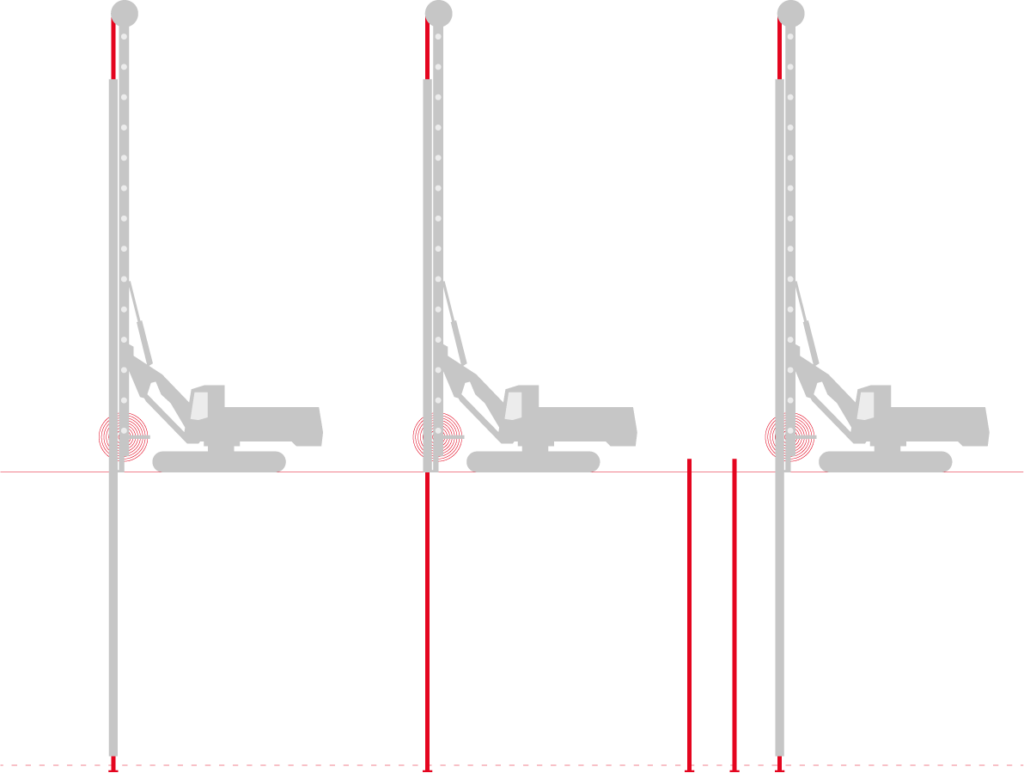
Vertical Drains comprise a plastic core which is surrounded by a geotextile (to prevent clogging).
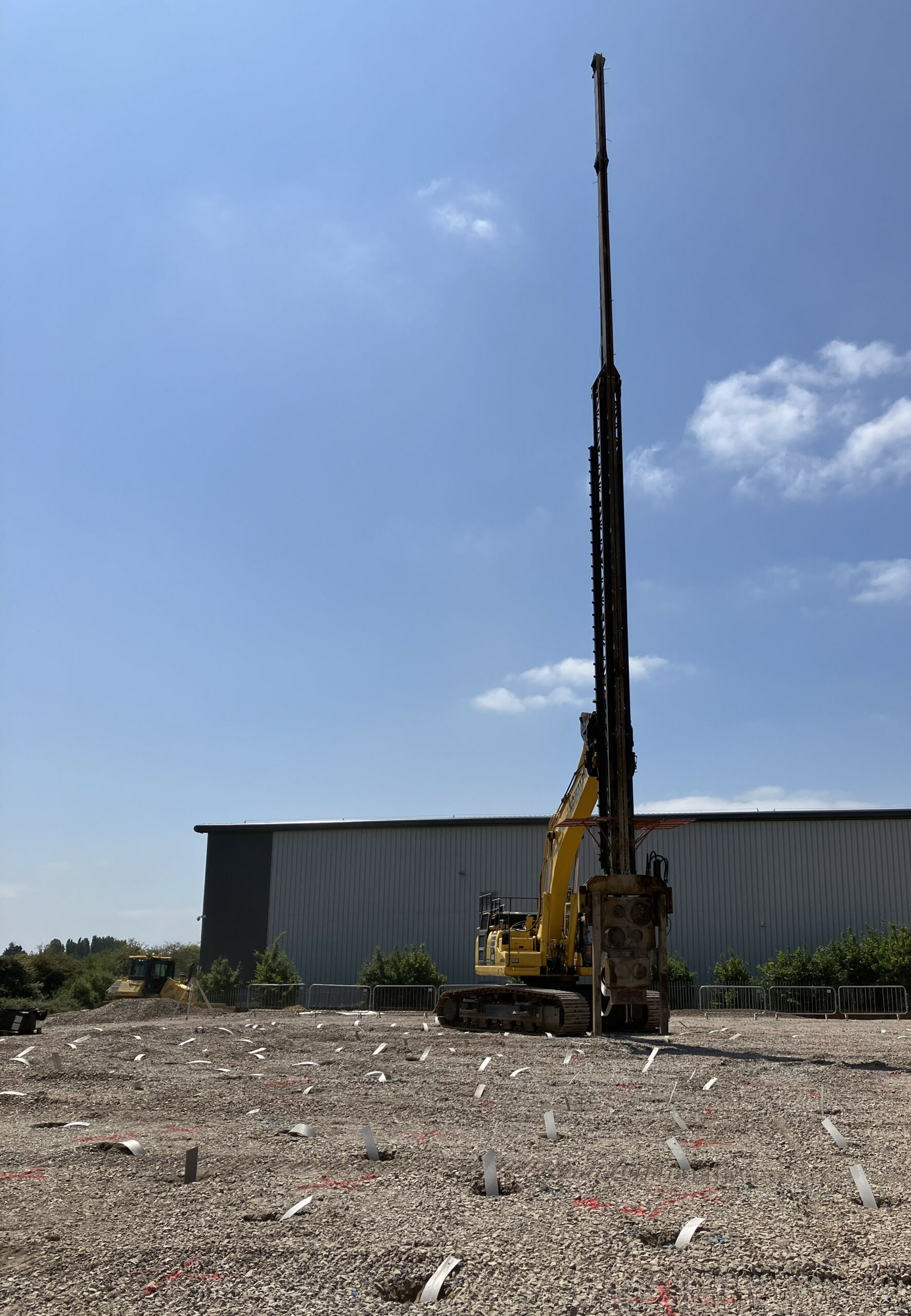
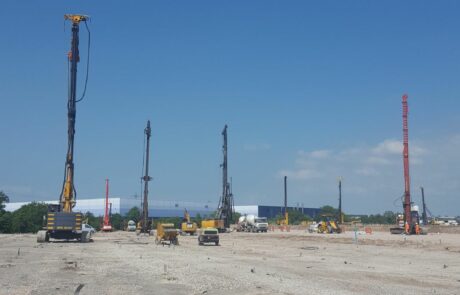
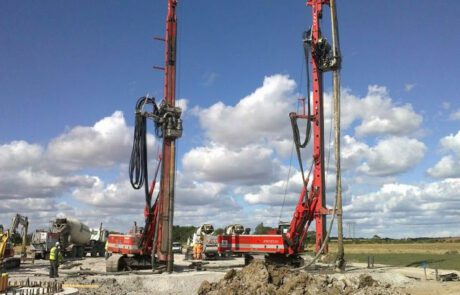
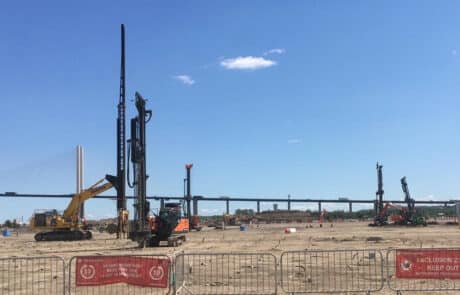
Subject to the ground conditions, either static, dynamic or static-dynamic installation methods are employed. The mandrel is attached to a sliding mast, which is attached to the arm of an excavator or a crane. This allows the installation of Vertical Drain networks to depths of about 50 metres.
The Vacuum Consolidation process is created when a vertical and horizontal draining system, combined with a vacuum pumping system is installed under an airtight and impervious membrane. The membrane is sealed into a network of peripheral trenches.