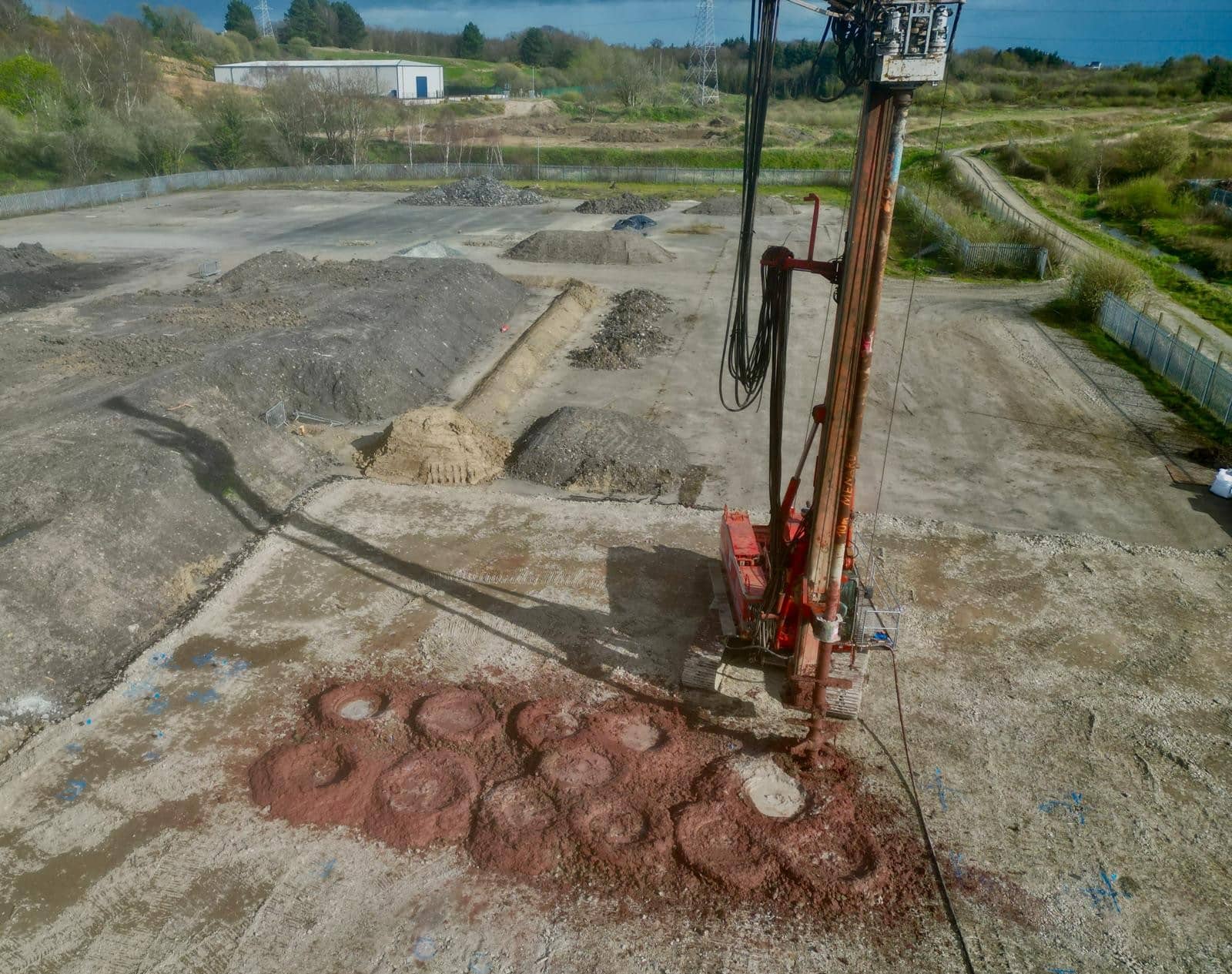
Soil mixing involves modifying the properties of weak soils to improve their load carrying and permeability characteristics.
The process involves using a single or multiple tool auger to break up the soil and then inject at low pressure a specifically designed binder, which is then thoroughly mixed with the soil. The mixing can be designed to be done as isolated columns or as a mass treatment.
Benefits
- Enhanced bearing capacity
- Reduction in settlements
- Reduces liquefaction
- Reduces thrust behind retaining structures
- Increases reaction around piled foundations
- Reduces permeability, blocking water movement and containing contamination
Application
- Foundations of low-rise buildings and houses
- Commercial/industrial hardstanding, foundations and floor slabs with high tolerances
- Infrastructure schemes including embankments, water treatment plants and windfarms
- Contaminated and landfill sites
Presentation and key elements
What is Soil Mixing and why do we use it?
Soil mixing is a versatile ground improvement method applied across a broad range of engineering challenges. It is used to limit and manage settlement beneath structures, enhance the bearing capacity of soils, and improve stability. The technique also helps mitigate liquefaction risks, enables mass stabilisation, reduces earth pressures acting on retaining systems, controls groundwater movement, and increases lateral reaction around foundation elements such as piles.
Fundamentals of Soil Mixing
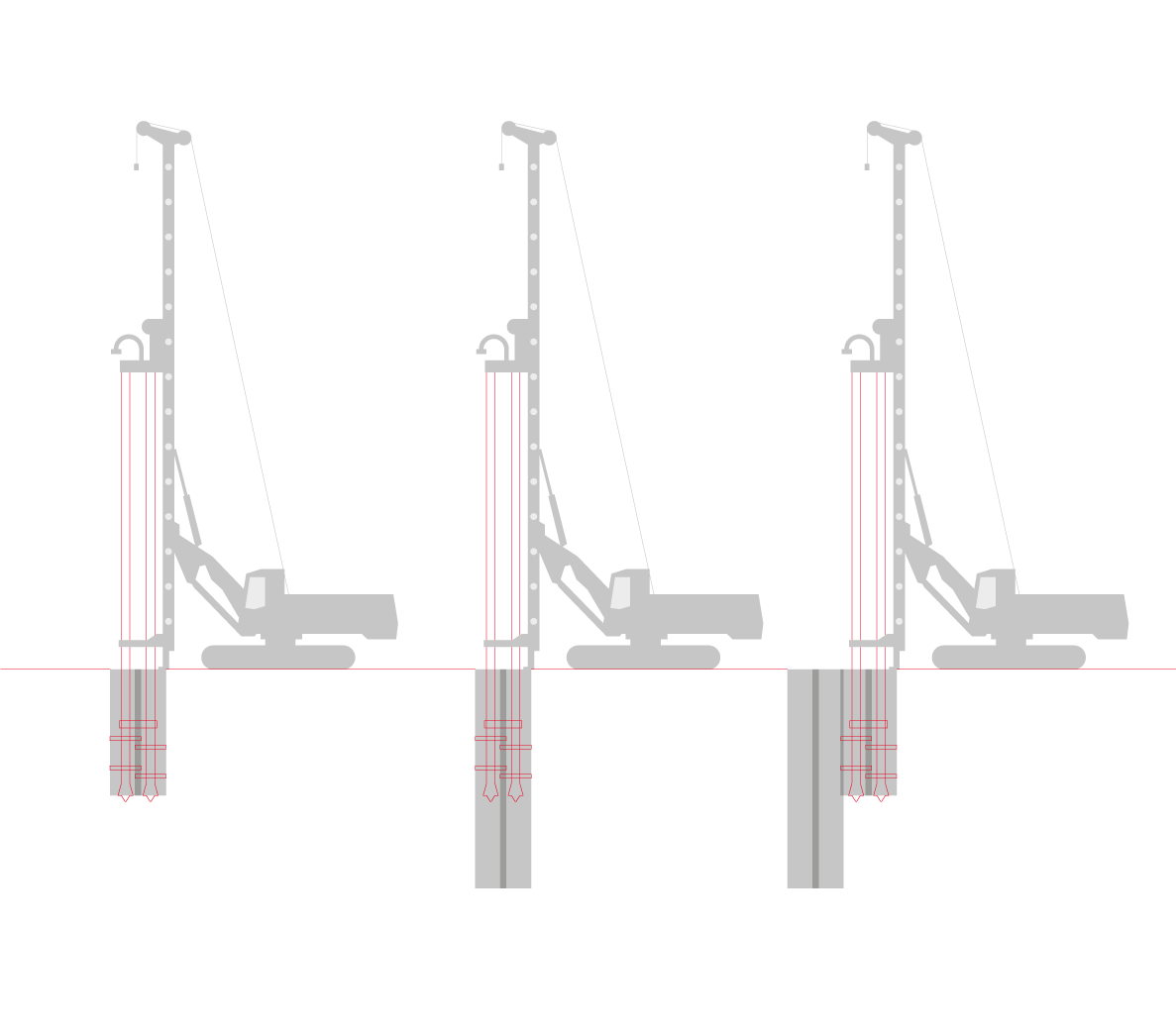
Soil Mixing is carried out using specially engineered augers or mixing tools that mechanically blend the existing soil with an in-situ binder. During the process, the soil is broken up while a binder is introduced at low pressure and comprehensively mixed, forming a reinforced block of soil.
A range of treatment configurations can be applied to suit project requirements and ground conditions. This adaptability makes soil mixing a highly versatile and effective ground improvement solution.
Soil Mixing Execution
The Soil Mixing rig is equipped with one or multiple mixing tools—such as augers, blades, or rotary heads—designed to inject binder directly into the treatment zone. As the equipment operates, the stabilising agent is introduced and intensively blended with the in-situ soil. Binder quantities and mixing settings are implemented based on the soil strength and the performance requirements.